If we had to name the single most common source of roof leaks we get called about, it's the chimney. Where the masonry meets the roof is the hardest seam on the house to keep watertight, and it's the spot the most often gets a quick tar patch instead of a real fix. We repair chimneys at the source so the leak actually stops.
Why chimneys leak
A chimney is a masonry tower punched through your roof, and water finds the four weak points over and over:
- Flashing — the metal that seals the chimney to the roof. When it's tar-only, rusted, or surface-mounted instead of woven into the masonry, it fails. This is the #1 cause.
- Crown — the concrete cap on top of the chimney. It cracks with freeze-thaw and lets water down into the structure.
- Cap — the cover over the flue. Missing or rusted, it lets rain straight down the chimney.
- Mortar & brick — old, porous mortar joints and spalling brick soak up water that then travels into the roof and walls.
Flashing done right — woven, not tarred
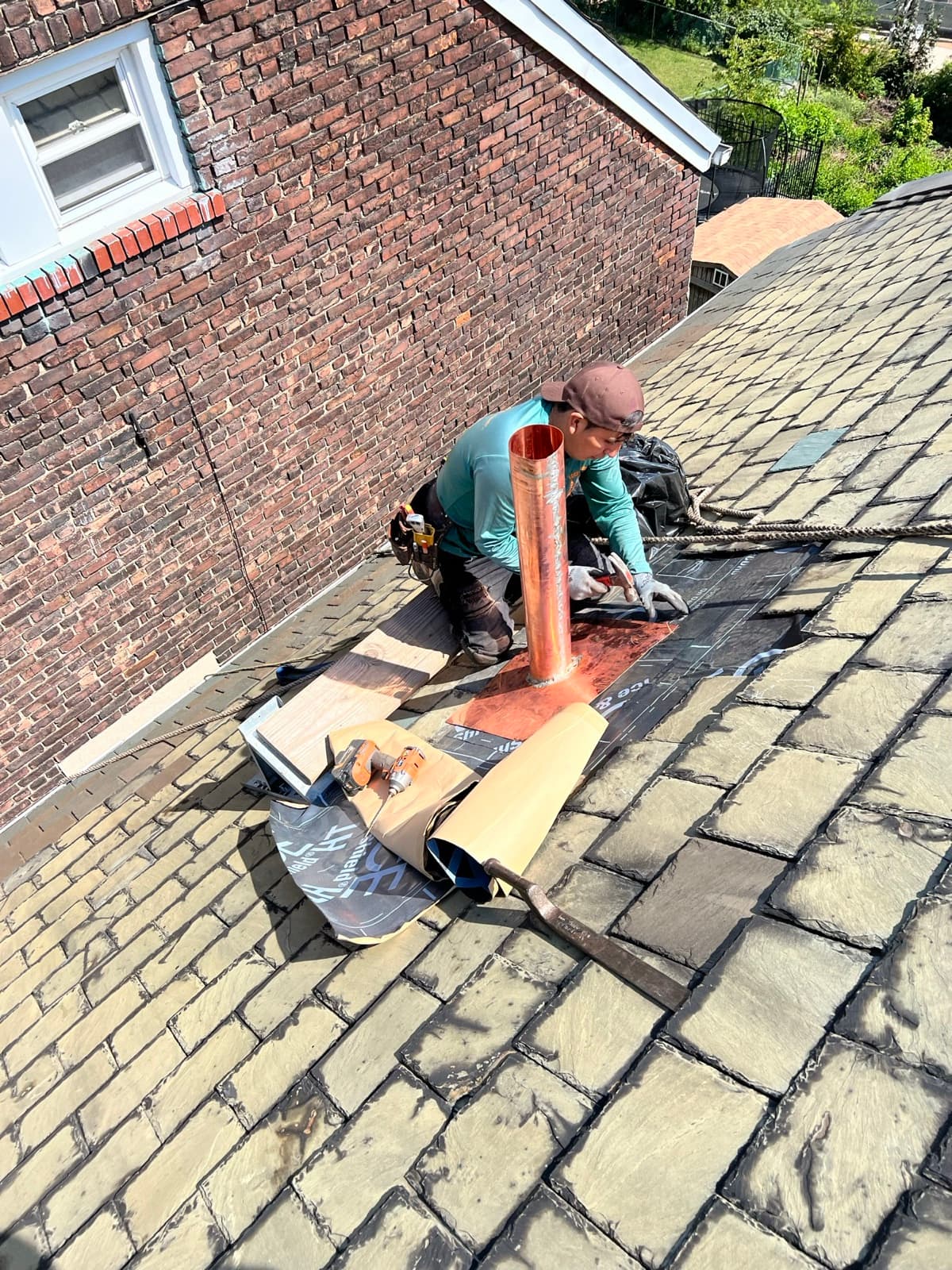
Proper chimney flashing is two layers: step flashing woven into the shingle courses, and counter-flashing let into a cut groove in the masonry and sealed. Done this way, it's a mechanical water barrier that lasts as long as the roof.
The cheap version — a bead of roof tar smeared where the chimney meets the shingles — looks fine for a season and then cracks, and the leak comes right back. We see it constantly. We do the real two-layer flashing so you're not calling someone back next spring.
Crowns, caps, tuckpointing & waterproofing
When the leak isn't the flashing, it's usually up top. We patch or rebuild cracked crowns, install proper chimney caps to keep rain out of the flue, tuckpoint failing mortar joints, and apply breathable masonry waterproofing to porous brick so it stops wicking water. On wide chimneys that dam up water and debris on the up-slope side, we build a cricket (saddle) to divert it — a detail that prevents the rot that wide chimneys are famous for.
Diagnosed, not guessed
The reason chimney leaks come back is that they get patched by guess — tar on the spot nearest the ceiling stain. Water travels, so the entry point is usually somewhere else entirely. We trace the actual leak path before we fix anything, which is why our chimney repairs hold.
When You Actually Need This
- A ceiling stain near a chimney or fireplace wall
- White staining (efflorescence) or crumbling mortar on the brick
- A cracked or spalling chimney crown
- A missing or rusted chimney cap
- Daylight or water visible around the chimney in the attic