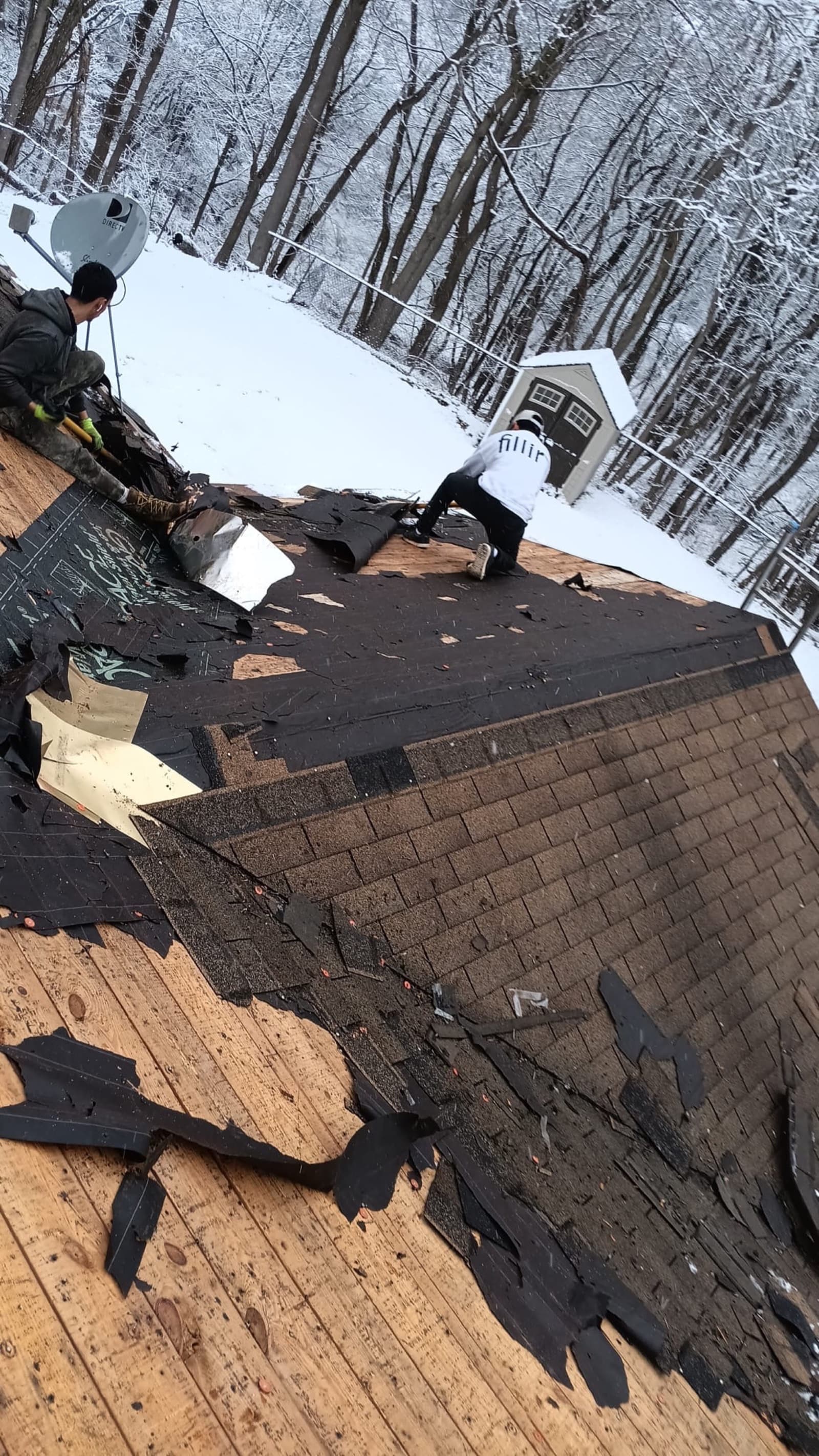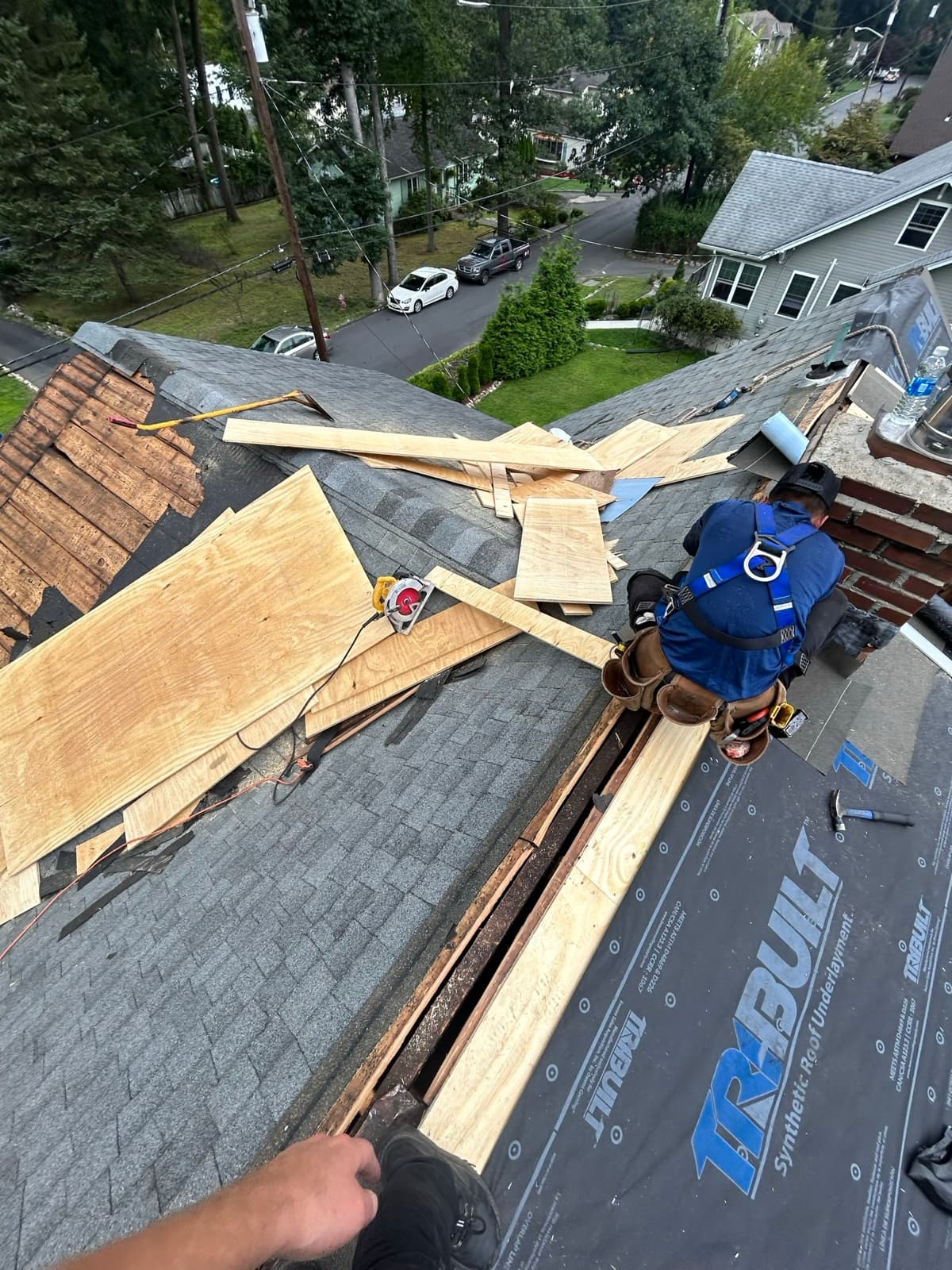
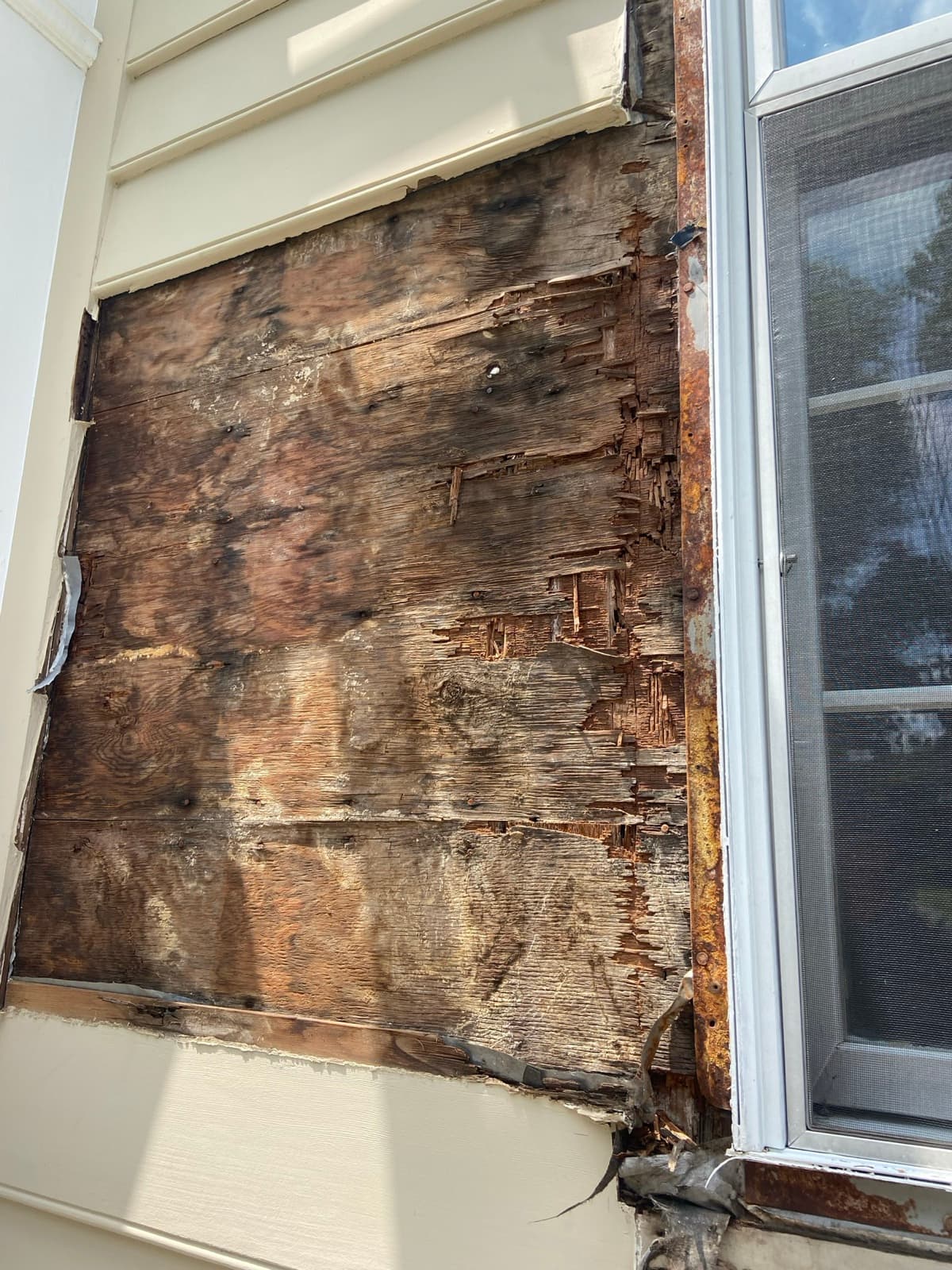
Insurance work is where roofing contractors get slippery, so start with who is allowed to do what. Three separate parties touch a roof claim. A contractor documents the condition of the roof and the probable cause of the damage. Your insurer's adjuster determines what the policy covers. And a public adjuster — licensed by the New Jersey Department of Banking and Insurance — is the only party who can negotiate or adjust a claim on your behalf for a fee. Zubar is a roofing contractor. We are not a public adjuster and not an attorney, and we will not act like either one.
So here is our actual job on your claim. We climb the roof and photograph the damage with dated, slope-identified images. We separate storm damage from long-term wear and tag each finding with its probable cause. We write a scope of repair line by line. We meet your adjuster on the roof and walk the damage with them. If their scope misses something the code or the manufacturer requires, we document it and submit it for review. What we do not do: file your claim for you, get it approved, fight your insurer, take an Assignment of Benefits, or touch your deductible.
Three parties, three jobs
A roof claim only works when each party stays in its lane. The contractor's lane is evidence: what is damaged, how badly, and what most likely caused it. The adjuster's lane is the contract — your policy language, your deductible, your endorsements, and what all of that obligates the carrier to pay. Those are different questions answered by different people, and no contractor's report, ours included, decides the second one. You cannot hand an adjuster a number and expect a check. They run their own inspection against your policy, and they should.
The reason to be this precise is that plenty of contractors are not. "We'll handle your claim." "We'll get you a new roof, we deal with the insurance." "We'll fight the adjuster for you." In New Jersey, negotiating or adjusting a claim for a fee without a public adjuster license is illegal, and a roofer who promises to do it is either breaking that rule or overselling what they can deliver. We inspect, document, write the scope, and stand on the roof with your adjuster to answer technical questions. That is the whole of our authorized role, and it is enough to give the claim a fair hearing. For the storm side of that work, see storm damage and insurance claims.
Storm damage versus wear — where most claims are won or lost
Almost every roof denial comes down to one sentence: the carrier calls the damage wear-and-tear, and wear-and-tear is not covered. So the whole argument is causation, and causation is readable on the shingle if you know what you are looking at. Hail and wind leave specific, documentable signatures. Age leaves a different one. The job is to photograph the difference clearly enough that it survives a second look.
Hail bruising is a soft spot. A hailstone strikes hard enough to fracture the asphalt mat under the granules, so the granules knock loose and the mat gives slightly when you press it — a bruise you can feel, usually roughly circular, scattered in a random pattern across the slope with matching dents on soft metals like gutter aprons, vent caps, and downspouts. Blistering looks similar to an untrained eye and is not storm damage at all: it is a pocket of trapped gas or moisture that popped out of the shingle under heat, leaving a pit with no bruised mat underneath and no collateral on the metals. One is a covered event. The other is manufacturing or heat, and the carrier will say so.
Wind works the same way. A wind-creased shingle has a sharp fracture line across the tab where the gust folded it back and broke the self-seal strip; once that seal is gone the tab lifts and flaps in the next wind, and the crease holds a clean line. That is storm damage. A shingle that curled from age curls gradually and uniformly across the whole slope, worst on the south and west exposures that take the most sun, with no crease and no broken seal — just a mat that has dried out and clawed. We tag each finding storm-created or wear, age, or installation, because that tag is the thing the carrier weighs, and blending the two helps no one.
- Hail: a fractured mat that gives under a thumb, random circular pattern, granules displaced to bare asphalt
- Hail collateral: dents on gutter aprons, downspouts, and vent caps that corroborate direction and force
- Wind: a crease across the tab and a self-seal strip that has released, tabs lifting on one exposure
- Age (not covered): uniform curling and clawing worst on south and west slopes, brittle tab edges, no crease
- Blistering (not covered): popped pockets leaving pits with an intact mat and no collateral damage
What we record so the file survives scrutiny
A scope of repair is only worth the photo log under it. Everything we document is recorded so that your adjuster, a home inspector, or the next roofer can stand where our inspector stood and check the same thing. We record measurements, not adjectives: a crease is 14 inches, not "significant." Where impact damage is in play, we mark a test square, count the hits inside it, and photograph the square so the density is countable rather than asserted. Drone imagery covers the slopes we cannot safely walk.
Each defect gets located to a specific slope and elevation — front or rear, compass face, or a numbered slope on a diagram — and carries three dated photos: a locating shot for context, an overview, and a close-up with the damage in frame. This is the same documentation discipline behind our Roof Health Assessment, and it is the part of a claim that actually holds up. You keep every photo we take, whether or not you hire us to do the work.
- Three date-stamped photos per defect: a locating shot, an overview, and a close-up
- Slope and elevation for every finding, tied to a numbered slope diagram
- Hail hit counts inside a marked, photographed test square
- Collateral readings on soft metals to corroborate wind or impact direction
- A probable-cause tag on each finding: storm-created, or wear, age, installation
Supplements are documentation, not negotiation
When an adjuster writes the first scope, it sometimes leaves out work that the repair genuinely requires — not extras, but items the building code or the manufacturer's installation instructions make mandatory. A code-required ice barrier at the eaves. Aluminum drip edge at the eaves and rakes. Valley material. A starter course. A ventilation component that has to be replaced to keep the new roof's warranty intact. When that happens, the contractor documents the missing item and it is submitted to the carrier for review. That submission is a supplement.
A supplement is not haggling and it is not a second bite at the number. It is a line the first scope missed, shown with the code section or the manufacturer spec that requires it. New Jersey builds on the International Residential Code through the Uniform Construction Code (N.J.A.C. 5:23); the IRC requires an ice barrier running from the eave to a point at least 24 inches inside the exterior wall line in areas subject to ice damming — which is all of Bergen, Passaic, Essex, Hudson, and Morris counties. If the approved scope skips that membrane, the roof cannot be built to code without it, and that is a documentable fact rather than an opinion. We record it, submit it, and let the carrier's adjuster review it against your policy.
Depreciation, actual cash value, and code-upgrade coverage
Two policy terms decide how much of the covered work you actually see paid, and both are worth understanding before the adjuster arrives. Many replacement-cost policies pay a claim in two installments. The first is actual cash value — the cost to replace the roof minus depreciation for its age and wear — paid up front. The rest, the withheld depreciation, is recoverable: the carrier releases it after the work is completed and invoiced, once you have shown the repair was actually done. Some policies, usually on older roofs, are actual-cash-value only and release nothing further. Which one you have is written on your policy — check it, or ask your carrier directly.
Code-upgrade coverage is separate again. Also called ordinance-or-law coverage, it is an endorsement that pays to bring the repair up to current code when the old assembly no longer meets it — the ice barrier, the drip edge, the ventilation that was legal when the roof went on but is required now. It may or may not be on your policy, and the limit varies when it is. We flag every code-driven item in the scope so you can see exactly what an ordinance-or-law endorsement would and would not cover, but whether you carry it is a line on your declarations page, not something we can add for you.
Your deductible, Assignment of Benefits, and the first hour
Your deductible is yours. It is the part of the loss you agreed to carry when you bought the policy, and it does not move. A contractor who offers to eat, absorb, or waive your deductible — usually by inflating the scope to bury it, or by simply not charging it while billing the carrier as if they did — is proposing insurance fraud. In New Jersey that is a crime, and it is your name on the claim, not just theirs. We charge your deductible every time, because the alternative puts you at legal risk to save you a little today.
An Assignment of Benefits is a document that hands your claim rights and your insurance payment directly to the contractor. It sounds like convenience and it is a loss of control: the contractor, not you, then deals with the carrier and collects the money, and disputes over scope become disputes you are no longer steering. We do not ask for one. You file your own claim, you stay in control of it, and you keep every photo we take regardless of who does the work.
If a storm just hit, the first hour matters more than the paperwork. If a tree came through the roof, our tree damage roof repair crew handles the emergency and the documentation in the same visit.
- Photograph everything before you touch it — roof, attic, ceiling stains, and yard debris
- Stop further damage with a properly battened tarp, not plastic stapled to the shingles
- Notify your carrier promptly — policies set a reporting window, so do not sit on it
- Get an independent inspection so the damage is on record from someone who is not the carrier
When You Actually Need This
- Wind or hail hit and you need the damage documented before you file
- Your carrier's adjuster is scheduled and you want someone on the roof with them
- A claim was denied as wear-and-tear and the causation looks wrong
- The approved scope left out the drip edge, ice barrier, or a valley
- A tree came down on the roof and you're opening a claim