A roof replacement is the single biggest exterior investment most homeowners ever make. Done right, it lasts 25 to 50 years and protects every dollar of the house under it. Done badly, it leaks within five and the warranty turns out to be paper.
What full tear-off actually means
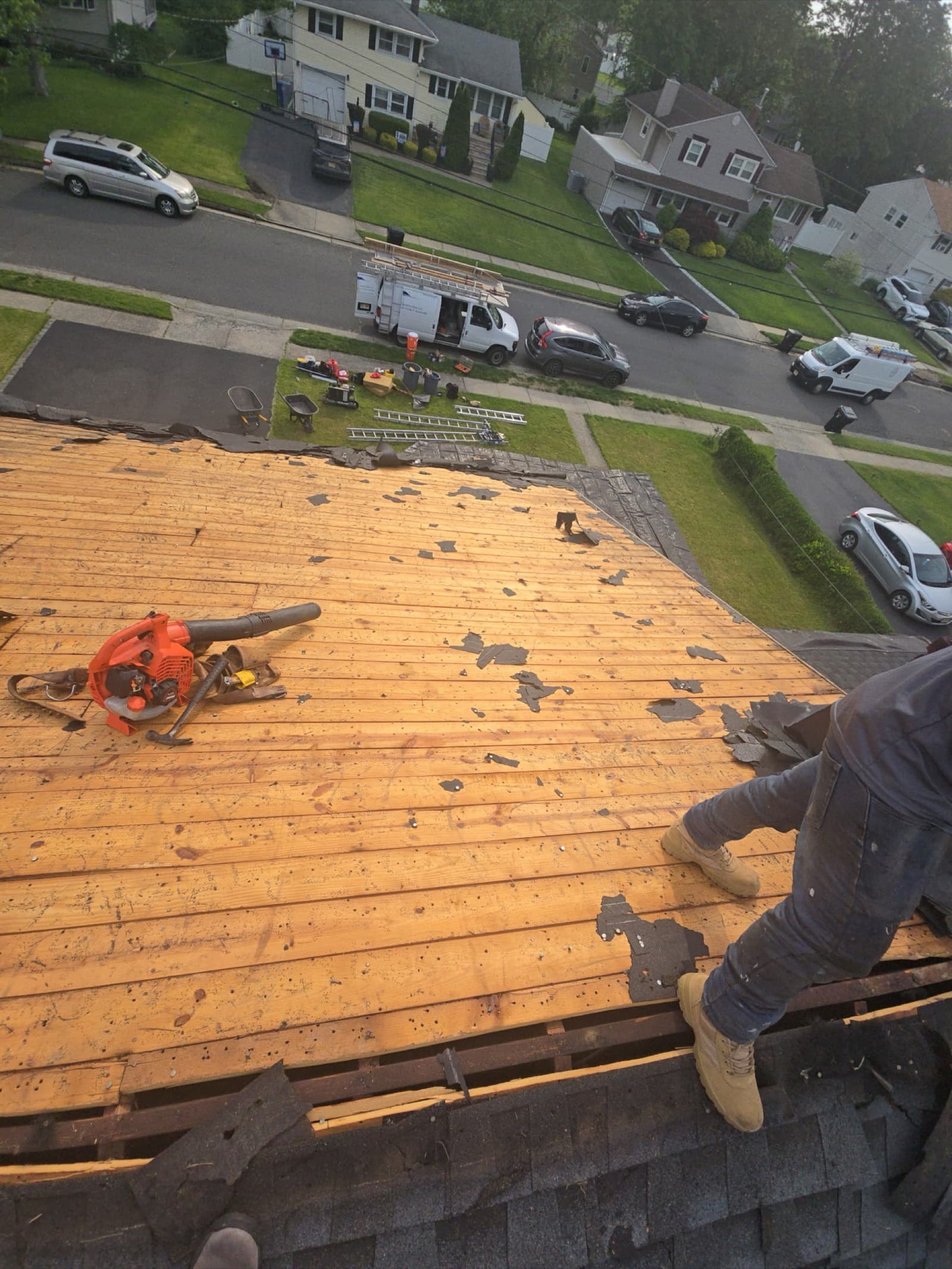
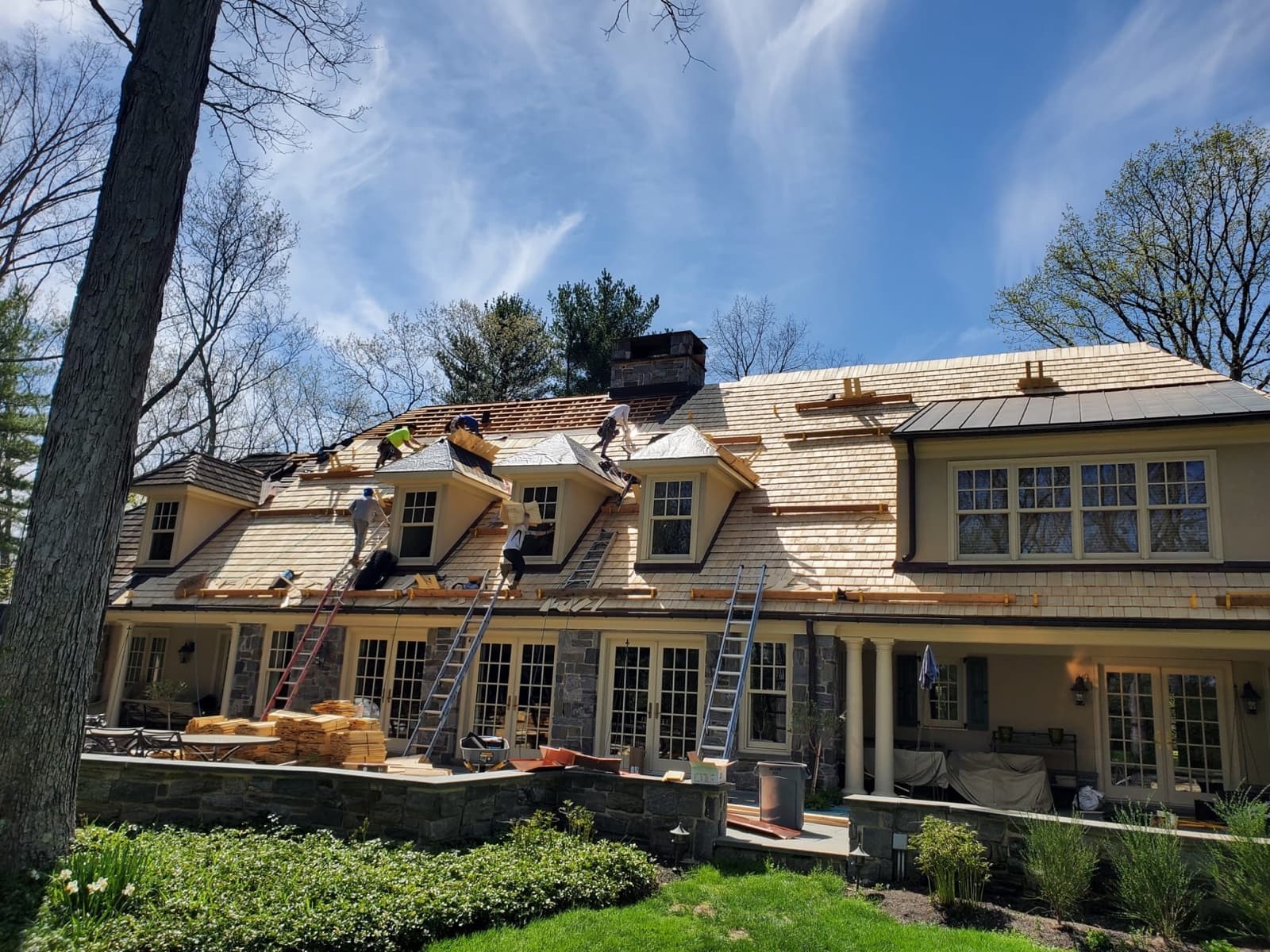
We tear the existing roof down to the original plywood or plank decking. Every shingle, every layer of underlayment, every old flashing piece — gone. Then we inspect each sheet of decking, replace anything soft or rotten at a flat per-sheet rate that's quoted up front, and rebuild the system from the deck up.
We won't overlay. Layering new shingles over old hides decking damage, voids most manufacturer warranties, doubles the weight on your trusses, and adds maybe five years of life. New Jersey building code limits roofs to two layers — and most of the homes we work on are already there. Tear-off is the only honest move.
The system, not just the shingles
A real roof is six layers, not one. Shingles are only the part you see from the curb.
- Deck — plywood or OSB, inspected and re-fastened where the previous installer used staples or short nails
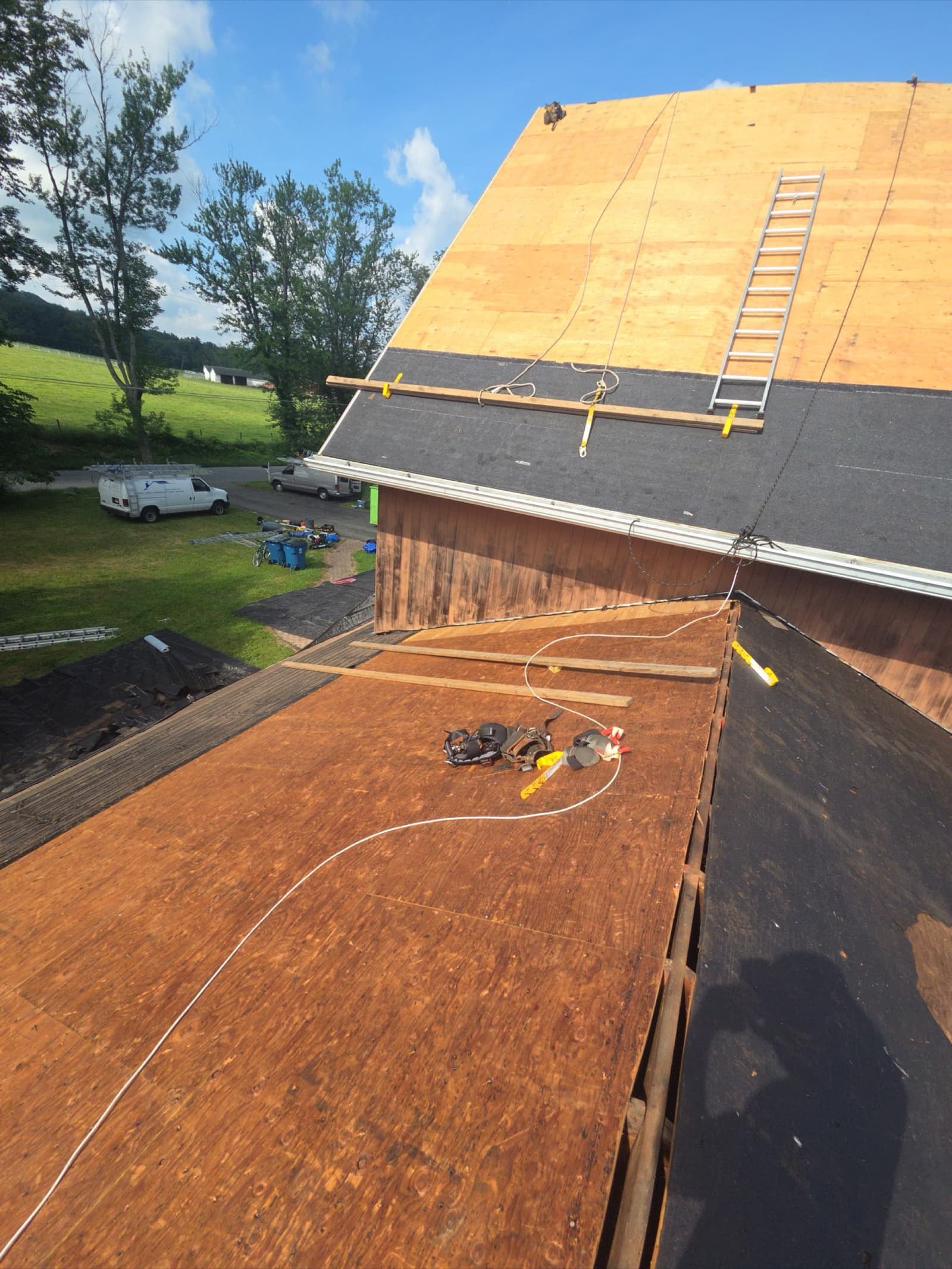
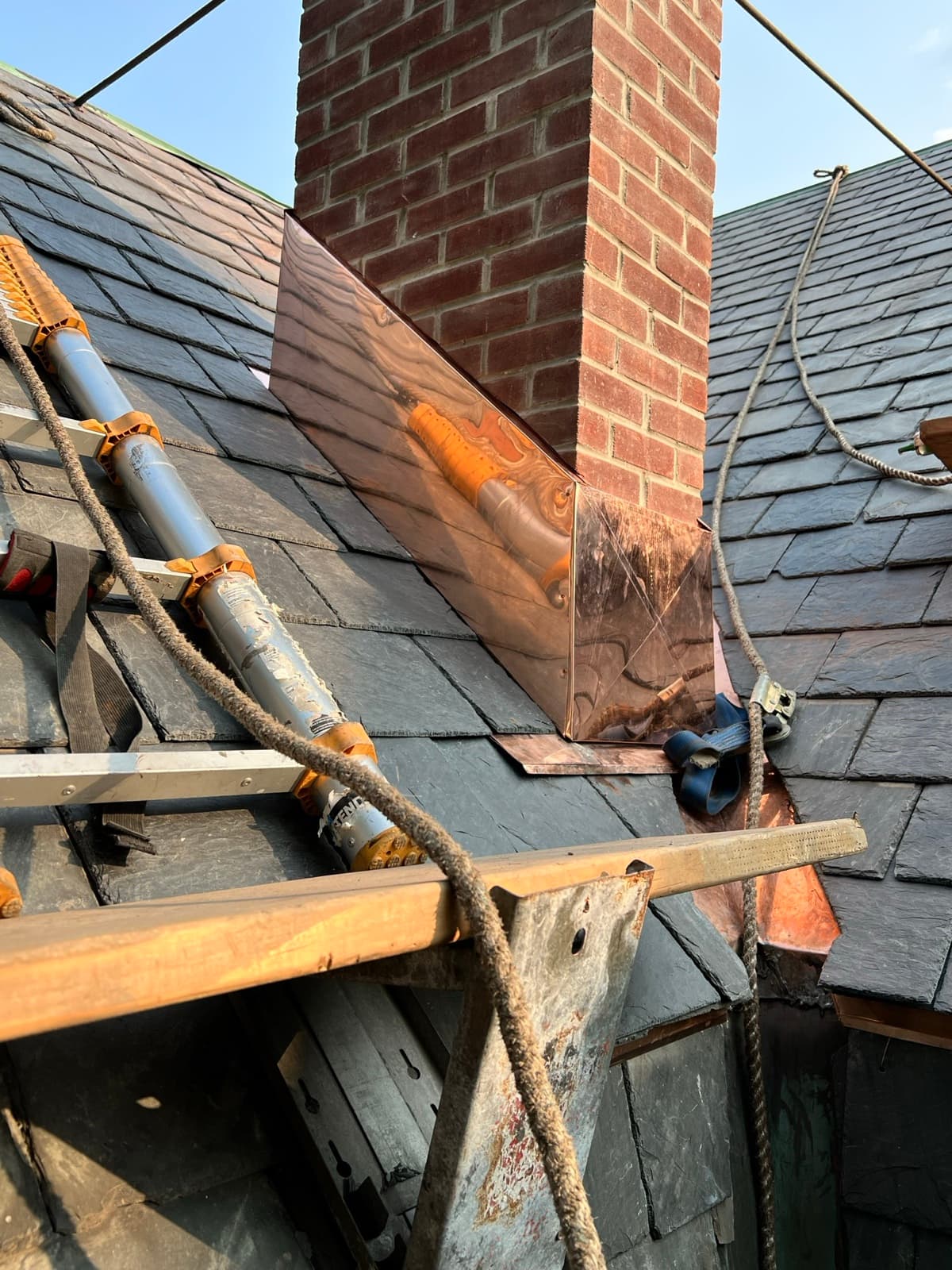
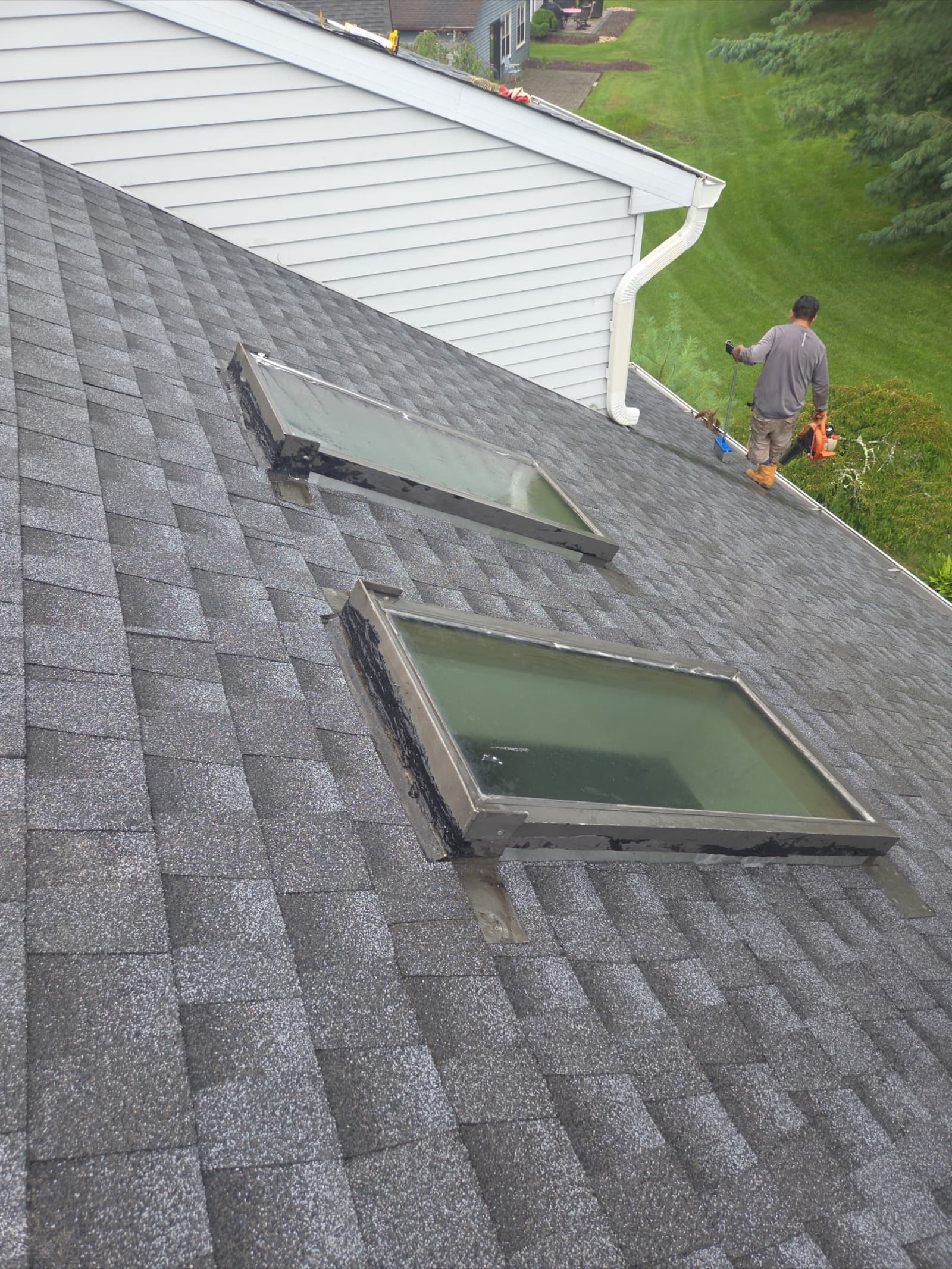
- Ice-and-water shield — peel-and-stick membrane at eaves, valleys, around chimneys, skylights, and every pipe penetration
- Synthetic underlayment — over the entire field, fastened with capped nails (not staples), tear-resistant and rated for higher temps than felt
- Drip edge + starter strip — aluminum drip edge under the underlayment at eaves and over it at rakes, sealed starter at every edge
- Step + counter-flashing — at every wall and chimney, never tar-only patches
- Ridge & soffit ventilation — continuous ridge vent balanced with soffit intake so your attic stays dry year-round
Why we install GAF, Owens Corning, and CertainTeed
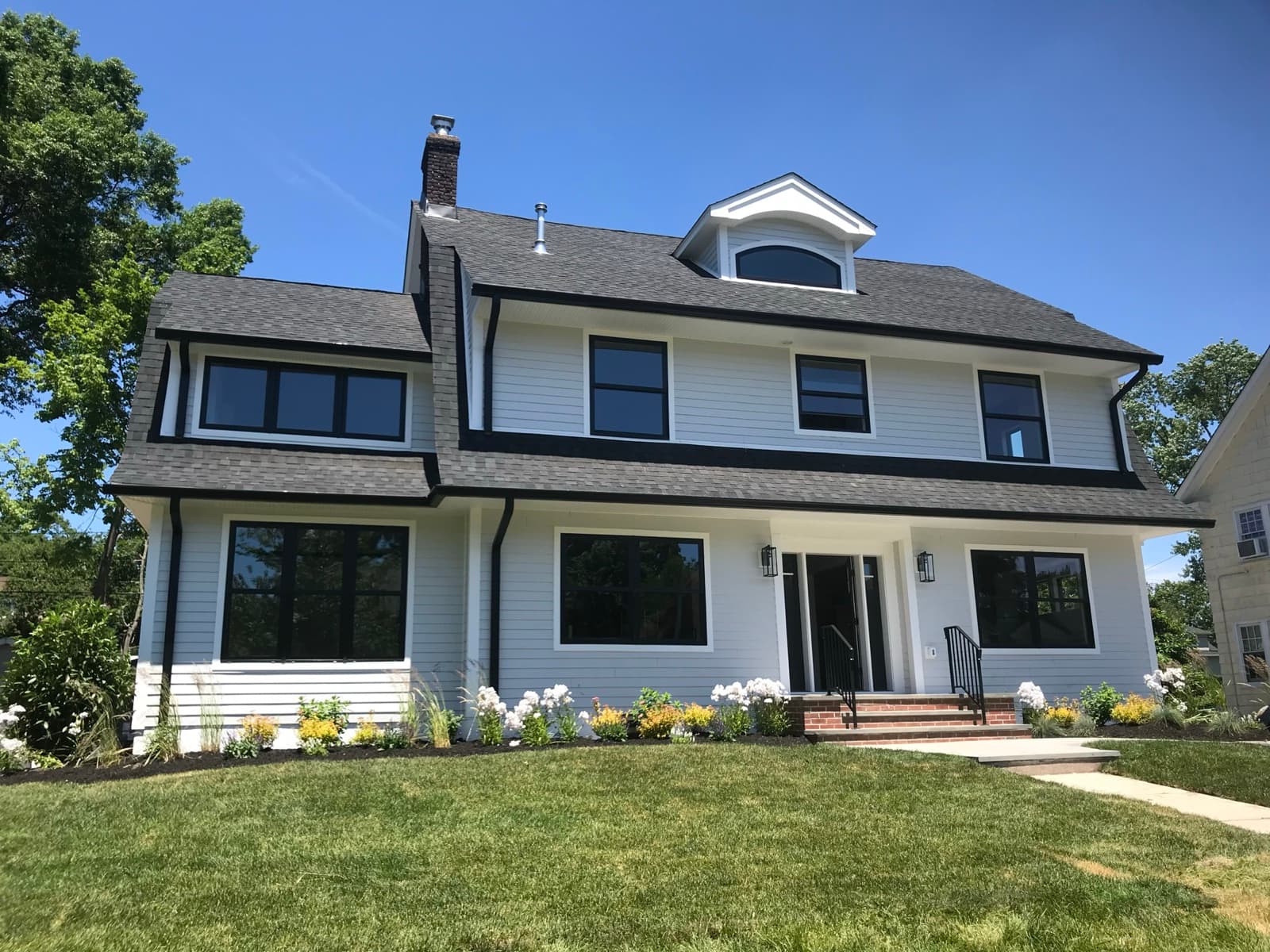
These three manufacturers control most of the residential shingle market in the Northeast for a reason. Their algae-resistant architectural lines (GAF Timberline HDZ, Owens Corning Duration, CertainTeed Landmark) have decades of field data behind them, they back installers with the strongest warranties in the industry, and parts are stocked at every NJ supply house — so if you ever need a repair down the road, the matching shingle is on the shelf.
We're credentialed with each: GAF-certified, Owens Corning Preferred Contractor, CertainTeed Shingle Master. That means we can register your roof for the enhanced system warranty (typically 25–50 years on materials), and you get coverage you would never get from a non-credentialed crew.
What drives the price in 2026
We don't publish one-size-fits-all prices, because they're wrong as often as they're right. Your roof has a specific number — we measure, itemize it line by line, and put it in writing, free. What we can tell you up front is exactly what moves that number, so when the quote lands you understand every line on it.
Size comes first: a bigger roof is more squares of material and more labor, plain and simple. Then pitch and complexity — a steep, cut-up roofline with valleys, dormers, hips, and skylights takes far more time to flash and shingle than a simple gable, and labor is most of the job. The shingle tier you pick matters too: an entry line, a standard architectural shingle, and a premium designer shingle are three different budget classes, and we'll walk you through where each one lands relative to the others. Access changes things — a tight lot where the dumpster and material can't get close, or a third story over landscaping, adds time. And decking is the wildcard: if we tear off and find soft or rotten plywood, replacing it is extra, charged at a flat per-sheet rate we disclose before we start so it's never a surprise.
The way to protect yourself is to compare quotes line by line, not bottom number to bottom number. A cheap quote often gets there by skipping ice-and-water shield, using staples instead of capped nails, overlaying instead of tearing off, or burying decking replacement as a later change order. Read what's actually included — tear-off vs. overlay, underlayment type, flashing, ventilation, warranty, cleanup — and the real comparison gets obvious fast. If the upfront cost is the obstacle rather than the value, financing is usually the right answer, and we'll walk through it alongside the written estimate.
How long the job actually takes
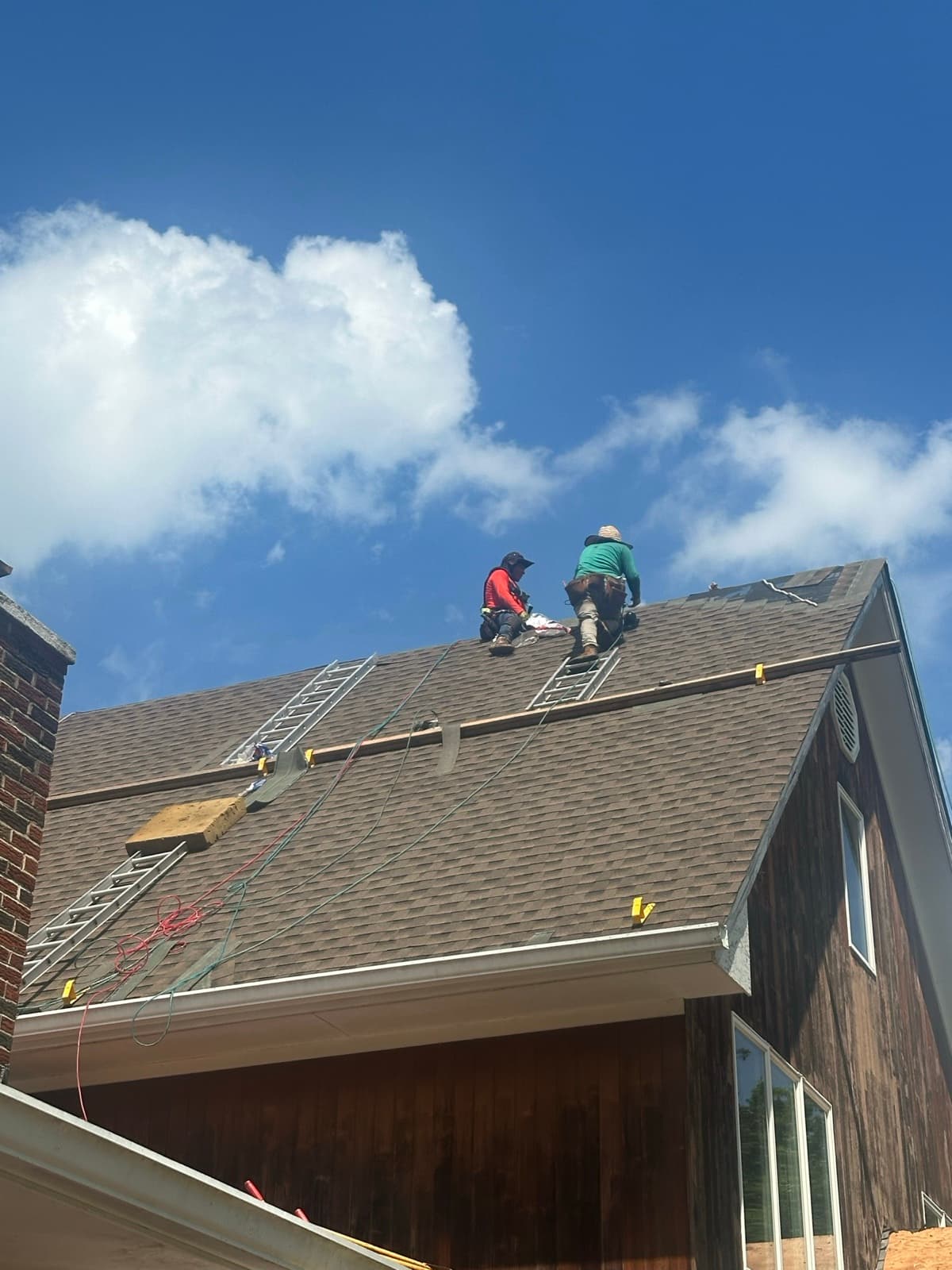
Most homes are a 1 to 2-day job once the crew arrives — tear-off and dry-in on day one, shingle install and clean-up on day two. Larger or more complex roofs (cut-ups, slate-to-shingle conversions, 30+ squares) run 3 to 4 days. We schedule with weather in mind and won't tear off if there's rain in the forecast we can't dry-in around.
When You Actually Need This
- Roof is 20+ years old and showing granule loss in gutters
- Multiple repairs in the last 3 years and leaks keep coming back
- Curling, cupping, or missing shingles across more than one slope
- Buying or selling a home with a roof past its useful life
- Storm damage with payout that makes replacement smarter than patching