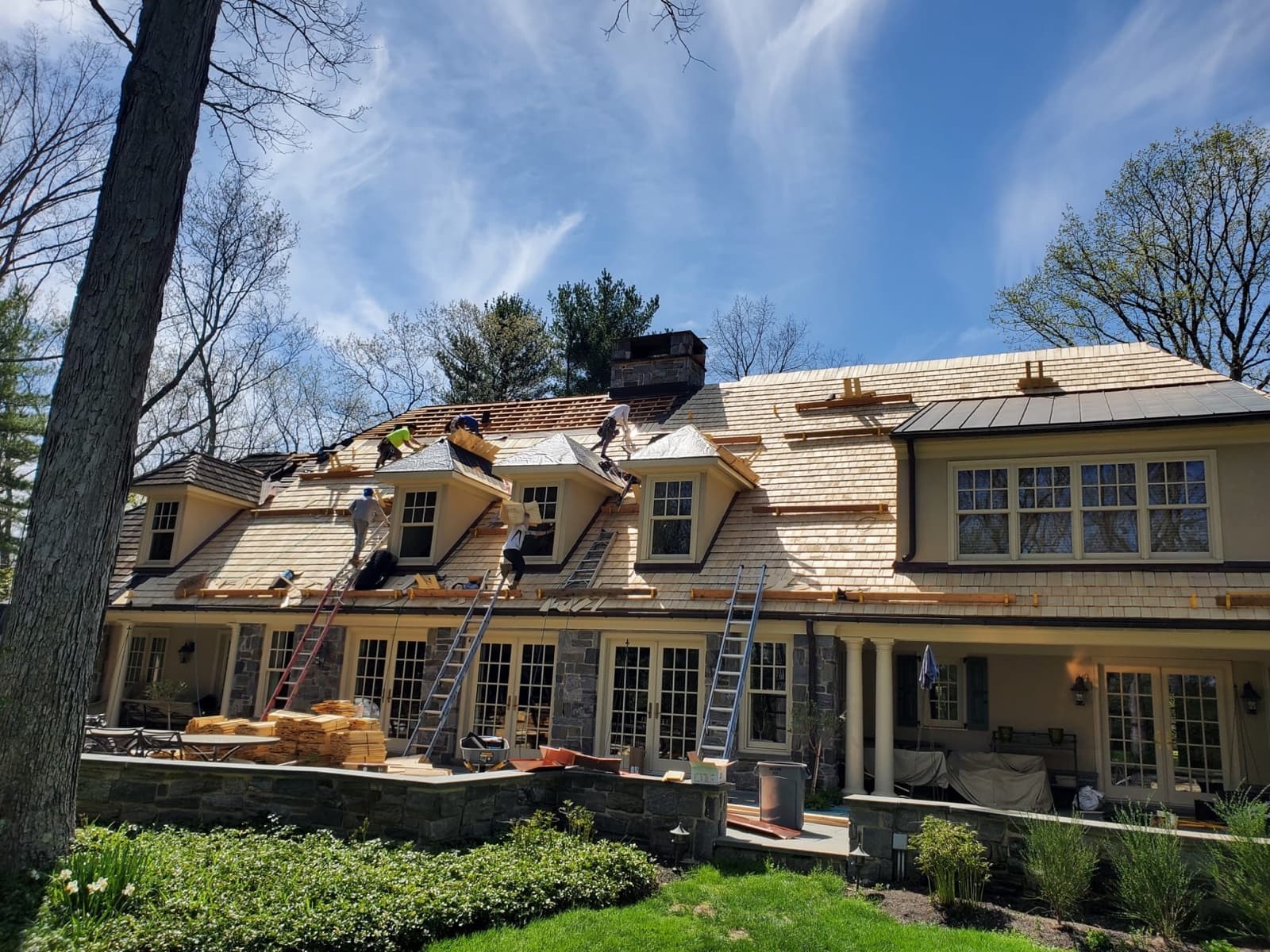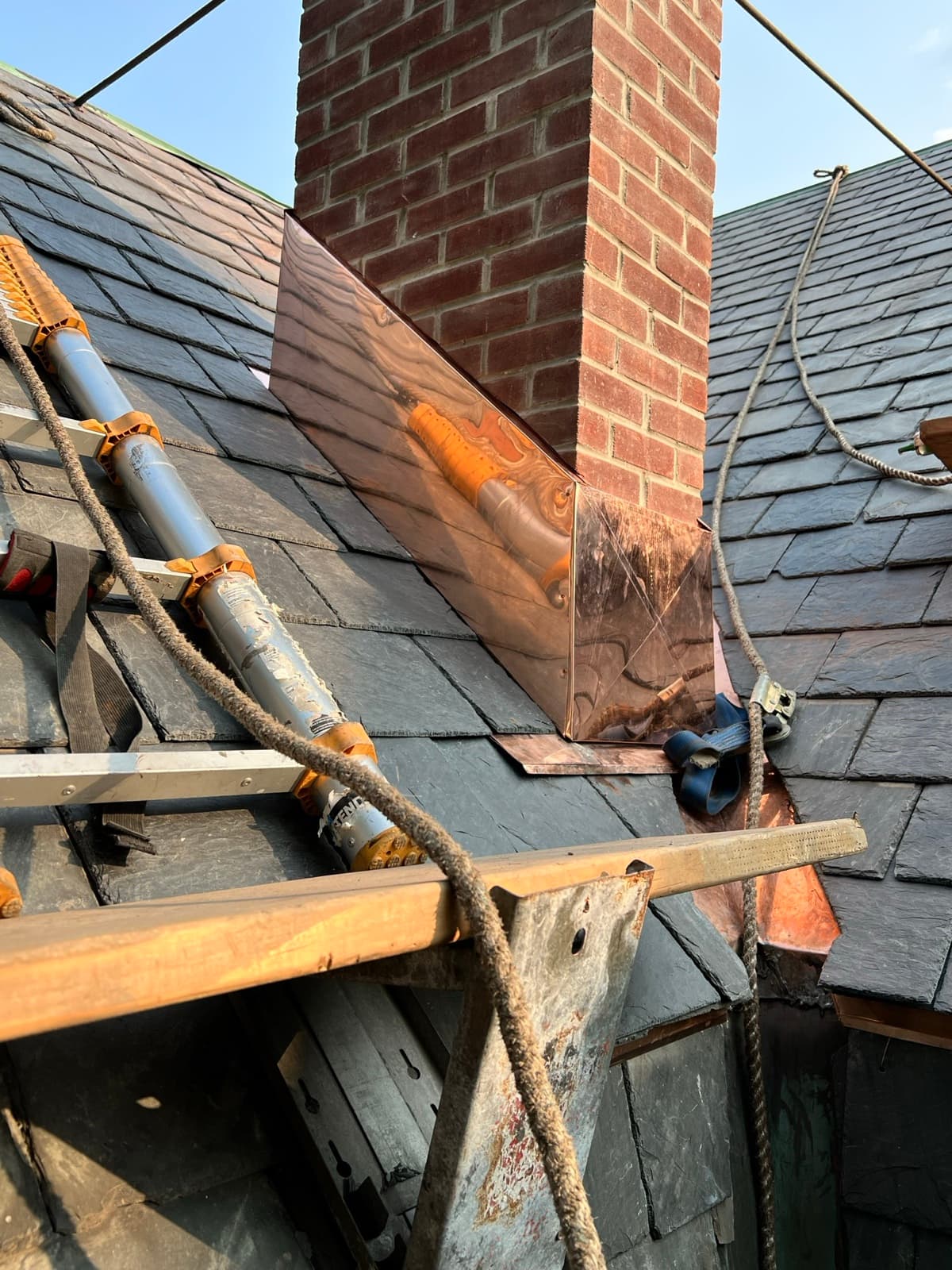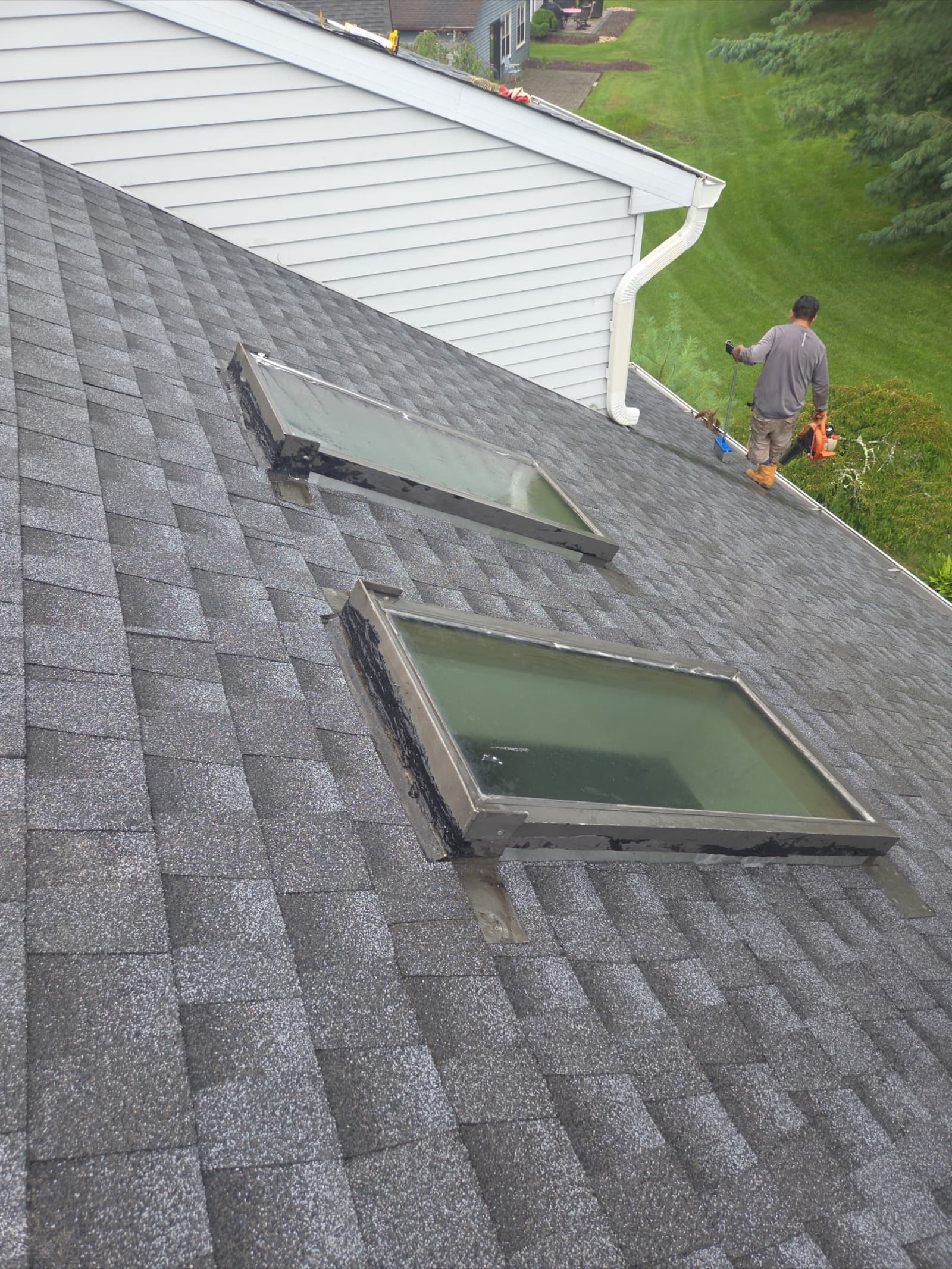
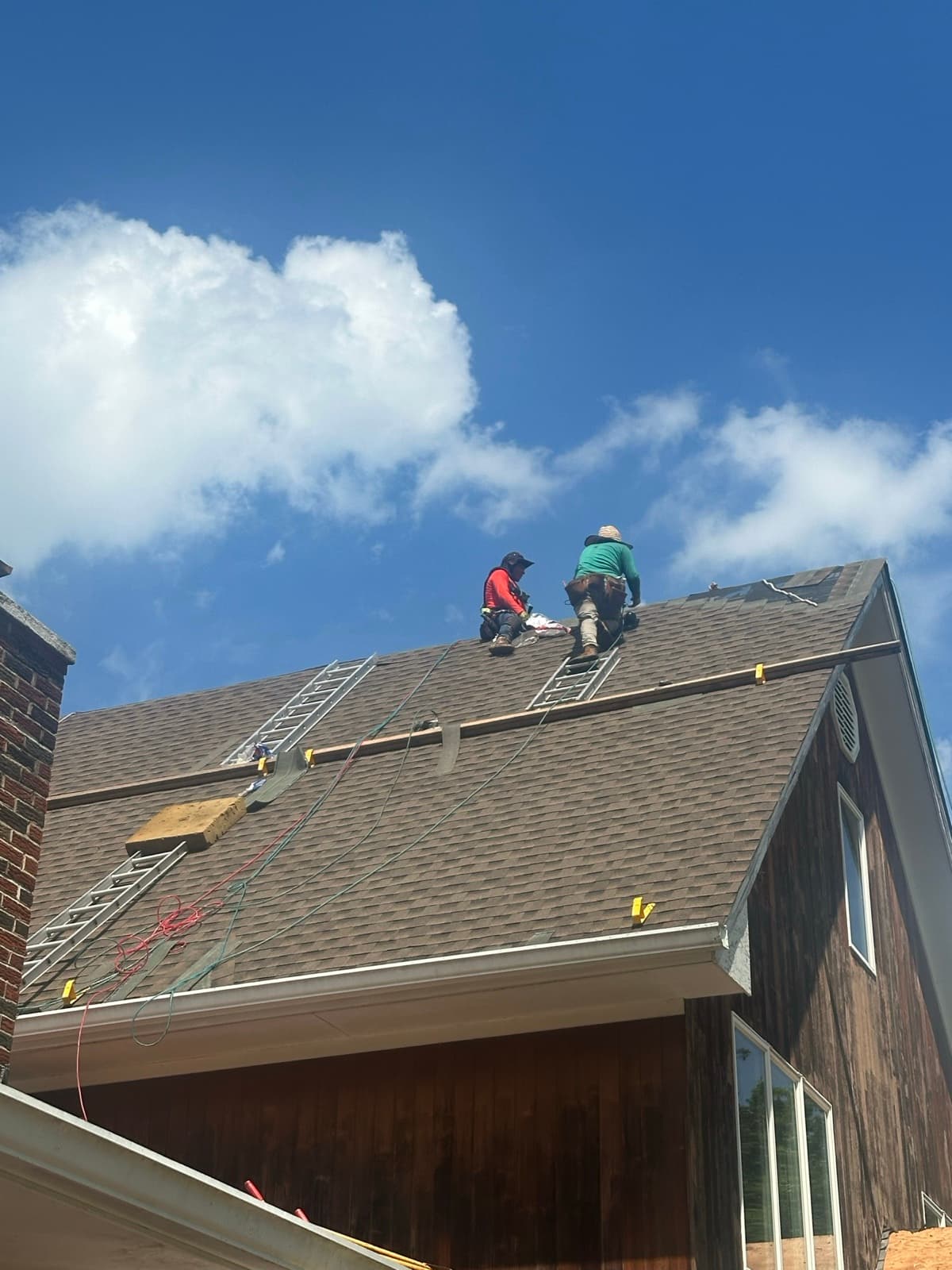
A roof on a new build is judged on two things — does it pass inspection the first time, and does it still look square in twenty years. Both come down to whether the crew followed manufacturer spec or cut corners while no one was watching.
Why builders bring us in early
Roofing is one of the few trades on a new build where a mistake stays buried. Bad flashing details, wrong nailing pattern, skipped ice-and-water shield — none of it shows on the C/O walkthrough. It shows three winters later when the homeowner is calling about a stained ceiling.
We've worked alongside enough New Jersey builders that we know the local inspector preferences in Bergen, Passaic, Essex, Hudson, and Morris county towns. We hit dry-in dates, leave the roof inspection-ready, and don't make your GC explain why the rough is sitting open in a rainstorm.
Addition + dormer tie-ins
Where a new addition meets an old roof is the highest-risk seam in residential construction. We strip back enough of the existing field to weave new shingles in properly, install full step-flashing into the existing siding (not surface-mount caulk), and re-seat any damaged underlayment we expose so you don't end up with a leak right at the join.
When You Actually Need This
- New home build at the dry-in stage
- Second-story addition or dormer punching through existing roof
- Detached garage, ADU, or barn
- Tear-down rebuild that needs a fresh system from the deck up