Drive a block in Montclair, Glen Ridge, or Ridgewood and you'll pass slate roofs older than anyone living under them — still doing their job. Slate, cedar, and copper are the best roofing materials ever put on American houses. They're also the most mishandled, because most roofing crews never work with them and quote what they know instead of what the roof needs.
This page is the honest version of the premium-roofing conversation. Real slate is a different budget class, and we say so up front. Most "failing" slate roofs are actually failing flashing, which is repairable for a fraction of replacement. And slate-look designer shingles are a legitimate middle path, not a consolation prize. Whichever of those conversations your roof belongs in, we'll tell you which one it is — in writing, for free.
Real slate is a different budget class — we'll say it up front
A natural slate roof is the best roof you can put on a house. It's also several times the cost of the architectural shingle work that makes up most of what we install — a genuinely different budget class, not an upgrade tier — and anyone who quotes slate without saying that plainly is setting you up. We don't publish a slate price, because the spread is enormous and a one-size-fits-all number would be wrong on almost every house. We measure your roof, itemize it line by line, and put a real number in writing, free.
The money goes three places, and knowing them tells you why two slate quotes on similar-sized houses can be a world apart. The material — quarried stone, graded and sorted, expensive to ship — is the most expensive thing on the roofing menu. The structure — slate weighs roughly three to four times what asphalt does, and some framing needs reinforcement before it can carry a new slate roof. (New Jersey hasn't required a construction permit for a basic shingle re-roof on most 1–2 family homes since 2018, but structural work absolutely requires one, and we pull it.) And the labor — slate is hand-nailed course by course on staging and roof jacks, by people who know how to walk it without cracking it, at a pace that can't be rushed. The steep Victorian and Tudor rooflines in towns like Montclair and Ridgewood add hips, dormers, and turrets, and every one of those is hours of cutting and flashing work. That's why the roofline is the price: a steep, cut-up slate roof can cost dramatically more than a simple one of the same square footage.
What you get for it is a roof measured in generations — 75 to 150 years for good hard slate. Per year of service, slate is arguably the cheapest roof made. But nobody budgets in centuries, so the honest question is whether you're preserving a home you love or just need to keep water out. Both are legitimate. They lead to different roofs — and to different conversations about financing if the upfront number is the obstacle.
Most "failing slate roofs" are actually failing flashing
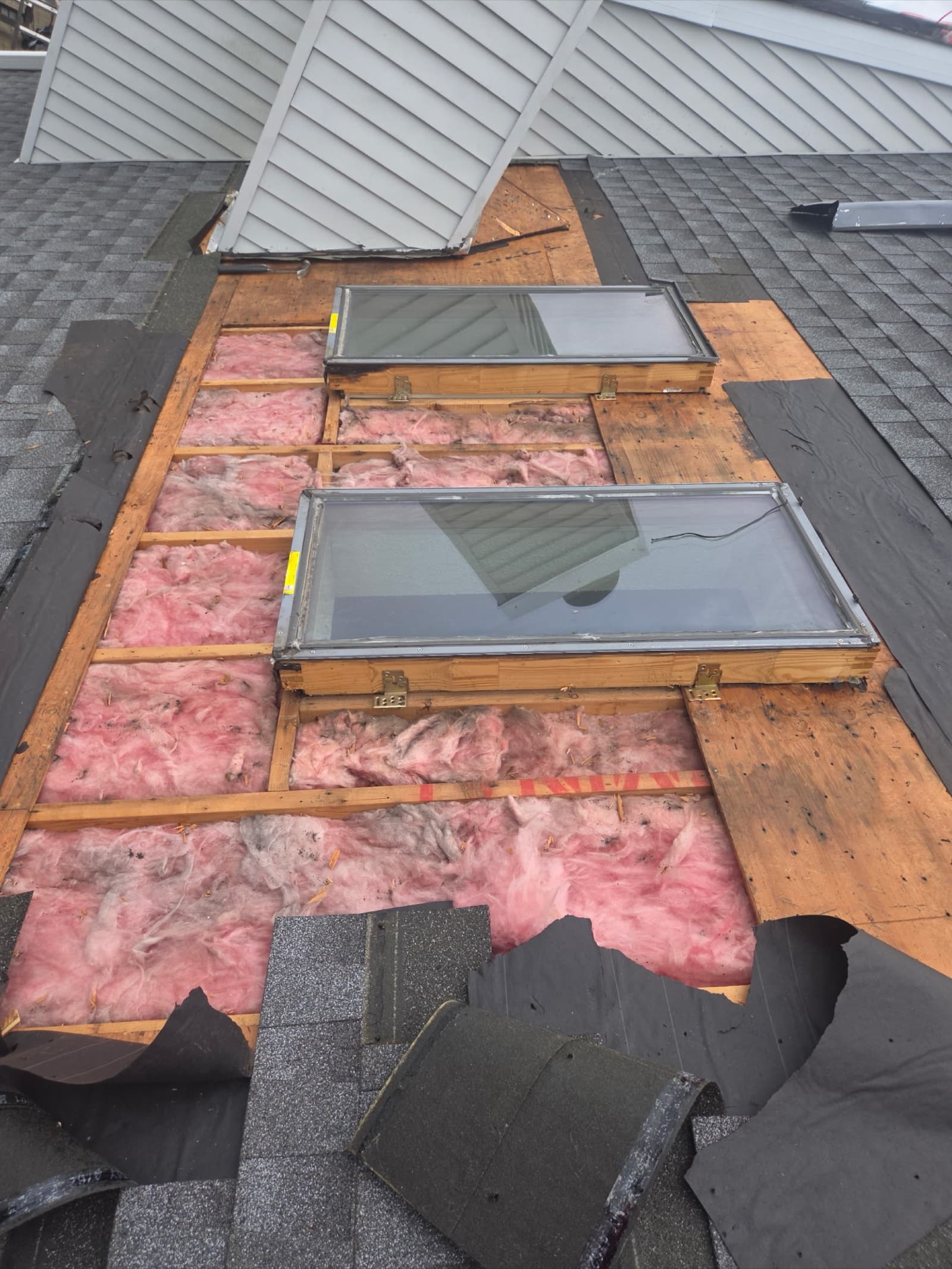
Here's the first thing worth knowing about the slate roofs on period homes in Glen Ridge and Montclair: the slate usually outlives the metal around it. The valleys, chimney flashing, and ridge details on a century-old slate roof were typically terne or galvanized steel — good for 60 to 80 years, which means most of it is past due. When it rusts through, water gets in, a stain shows up on a ceiling, and somebody who doesn't work slate quotes a full tear-off, because that's the only thing they know how to sell.
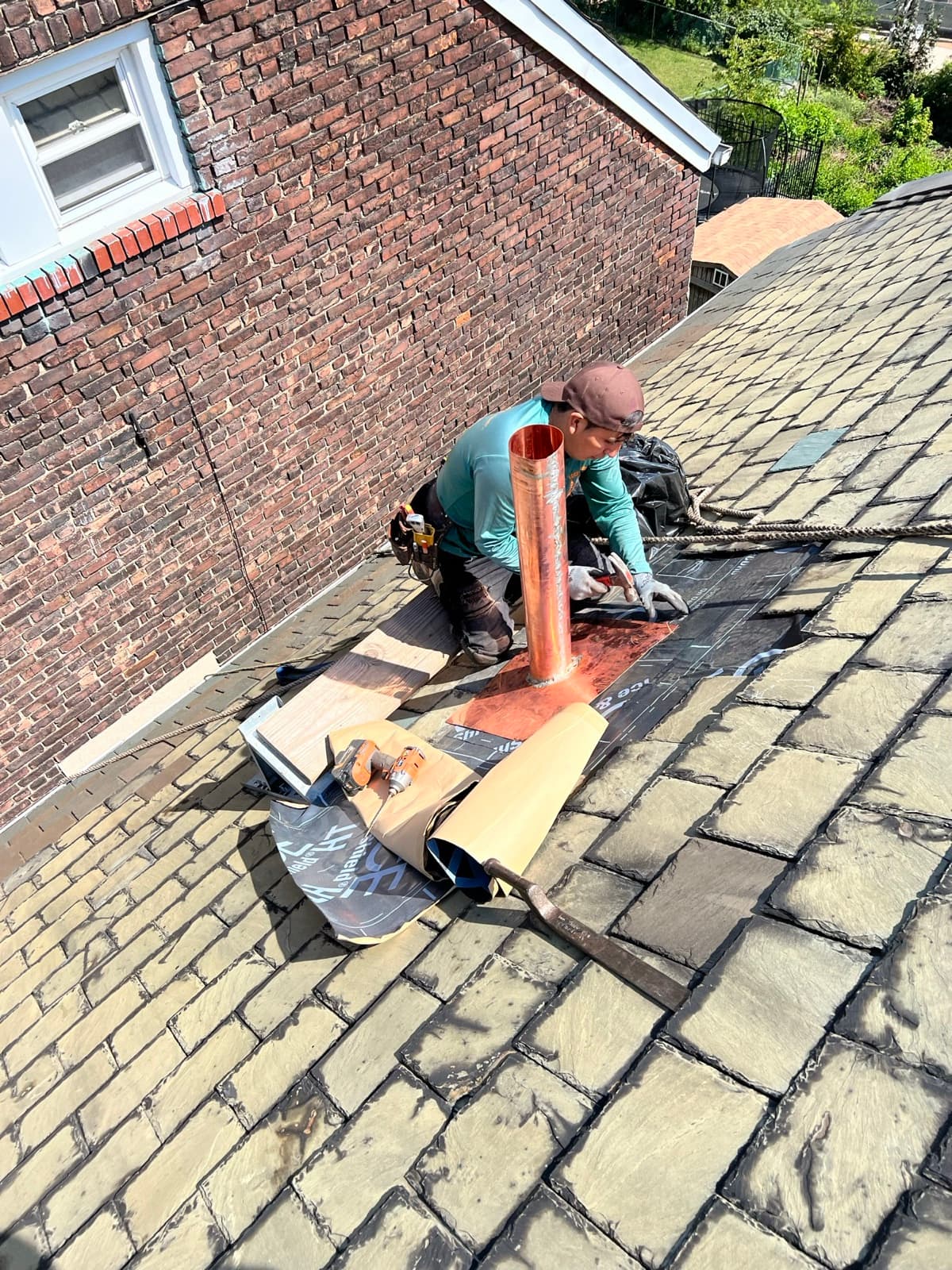
If the slates themselves are sound, that roof is repairable — for a small fraction of what a full slate replacement would run. We replace the failed metal with copper that will outlast the rest of the roof, slip out the broken or slipped slates, and set matching salvaged slate in their place with slate hooks or copper bibs — no exposed nails, no tar. Salvaged slate matters: a reclaimed Vermont gray-green or Pennsylvania black matches the weathered color of what's up there in a way new quarry stock can't, so the repair disappears into the field.
How we tell the difference between a repair and a goodbye:
- Hard slate — Vermont, Buckingham Virginia — rings when tapped, holds crisp edges, and routinely serves 100+ years. If it rings and the leak traces to flashing, repair is the honest answer.
- Soft Pennsylvania slate at end of life sounds dull, flakes in layers, and powders at the edges. If it's delaminating across whole slopes, the roof is done and we'll show you the photos.
- A handful of broken slates after a storm is a repair, not a verdict. Slates crack from foot traffic and falling limbs on otherwise healthy roofs all the time.
Slate-look designer shingles — the honest middle path
When a slate roof truly is done — or the house deserves the look and the budget doesn't reach real stone — slate-look designer shingles are the answer we recommend most often. Lines like CertainTeed Grand Manor and Presidential and Owens Corning Berkshire are heavyweight laminated shingles cut and shadowed to read as slate from the street. On a steep period roofline in Ridgewood or Montclair, viewed from the sidewalk, they preserve the character of the streetscape — which is most of what a historic neighborhood actually asks of a roof.
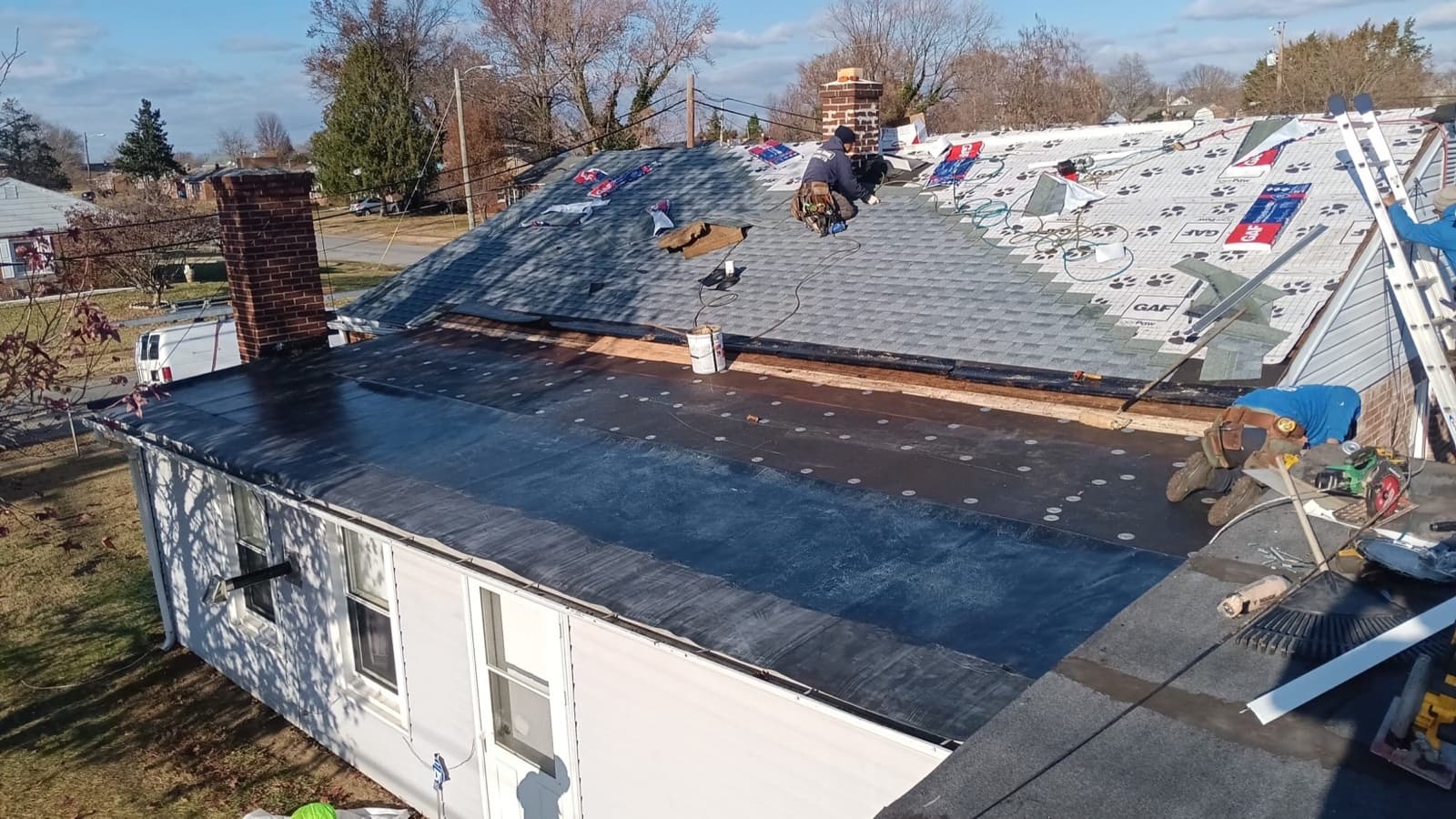
The honest version: up close they're an asphalt shingle, and they'll last 30 to 50 years, not a century. But they carry a meaningful premium over a standard architectural roof rather than the several-times multiple that real stone commands — a manageable step up, not a different budget class. They weigh what your framing already carries, so there's no structural work or permit triggered by it, and they install and warranty like any premium shingle system — manufacturer coverage up to 50 years plus our 10-year transferable workmanship warranty. For most period homes whose original slate has genuinely failed, this is the right call, and we'd rather tell you that than sell you stone.
Cedar shake and shingle — beautiful, if you'll maintain it
Cedar is the warmest roof made, and on the wooded estate lots of Franklin Lakes and Alpine it's often the right architectural answer. We install both hand-split shakes — thick, irregular, rustic — and sawn cedar shingles, which lay flatter and read more tailored. Either way, the install detail that matters most is invisible: cedar has to dry from both sides, so it goes over a breather mesh or skip sheathing, never sealed flat to the deck. Cedar nailed tight to solid underlayment rots from underneath — it's the most common installation mistake made on cedar roofs.
The other honest part: cedar is a relationship. Keep the valleys and the field clear of debris, keep moss off the shaded slopes, wash and treat it on a several-year cycle, and a good cedar roof gives you 25 to 40 years. Skip the maintenance under heavy New Jersey tree cover and it can fail in half that. If you love the look but know you won't keep up with it, say so — we'll point you at a shake-profile designer shingle instead. We'd rather lose the bigger job than install a roof you'll resent in ten years.
Copper — the highest-leverage metal on the roof
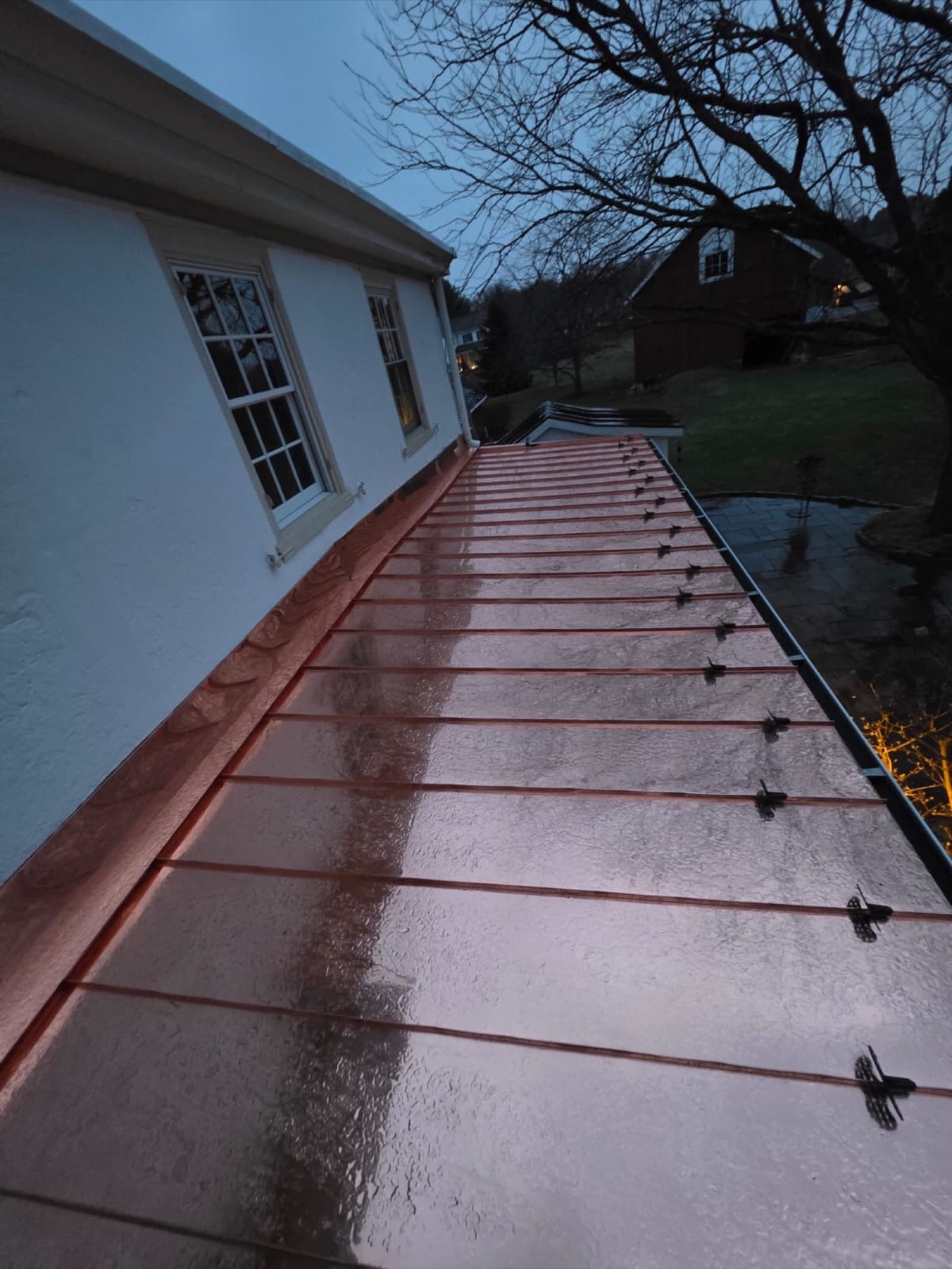
Copper is where premium roofing earns its keep even on an ordinary budget. Valleys, chimney step and counter-flashing, crickets, bay-window roofs, porch standing seam, dormer cheeks — these are the exact spots where roofs actually fail, and copper there outlasts everything around it. A 16- or 20-ounce copper valley with soldered seams — soldered, not caulked, because caulk is a five-year material on a fifty-year detail — is the last valley that roof will need.
That's why copper is the right metal for slate work: matching lifespans is the whole logic of a slate roof. It's also why copper accents belong on designer-shingle and cedar roofs in towns like Glen Ridge and Franklin Lakes, where the original copper detailing is part of the architecture. New copper starts bright, runs through brown, and settles into its soft green patina over a couple of decades — we'll show you samples at each stage so nothing surprises you in year three.
If you take one thing from this page: before anyone tears off your slate or quotes you a full slate replacement, have the flashing diagnosed by someone who works these materials. The repair is a fraction of the replacement, and the estimate is free and in writing either way — (973) 337-9001.
When You Actually Need This
- A slate roof leaking at the valleys, chimney, or ridge while the slates themselves still look sound
- Cracked, slipped, or missing slates on a period home in Montclair, Glen Ridge, or Ridgewood
- Slate that's flaking, powdering, or delaminating across whole slopes — genuine end of life
- A cedar roof that's curling, mossy, or hasn't been maintained in years
- Original copper valleys or flashing finally worn through after decades of service