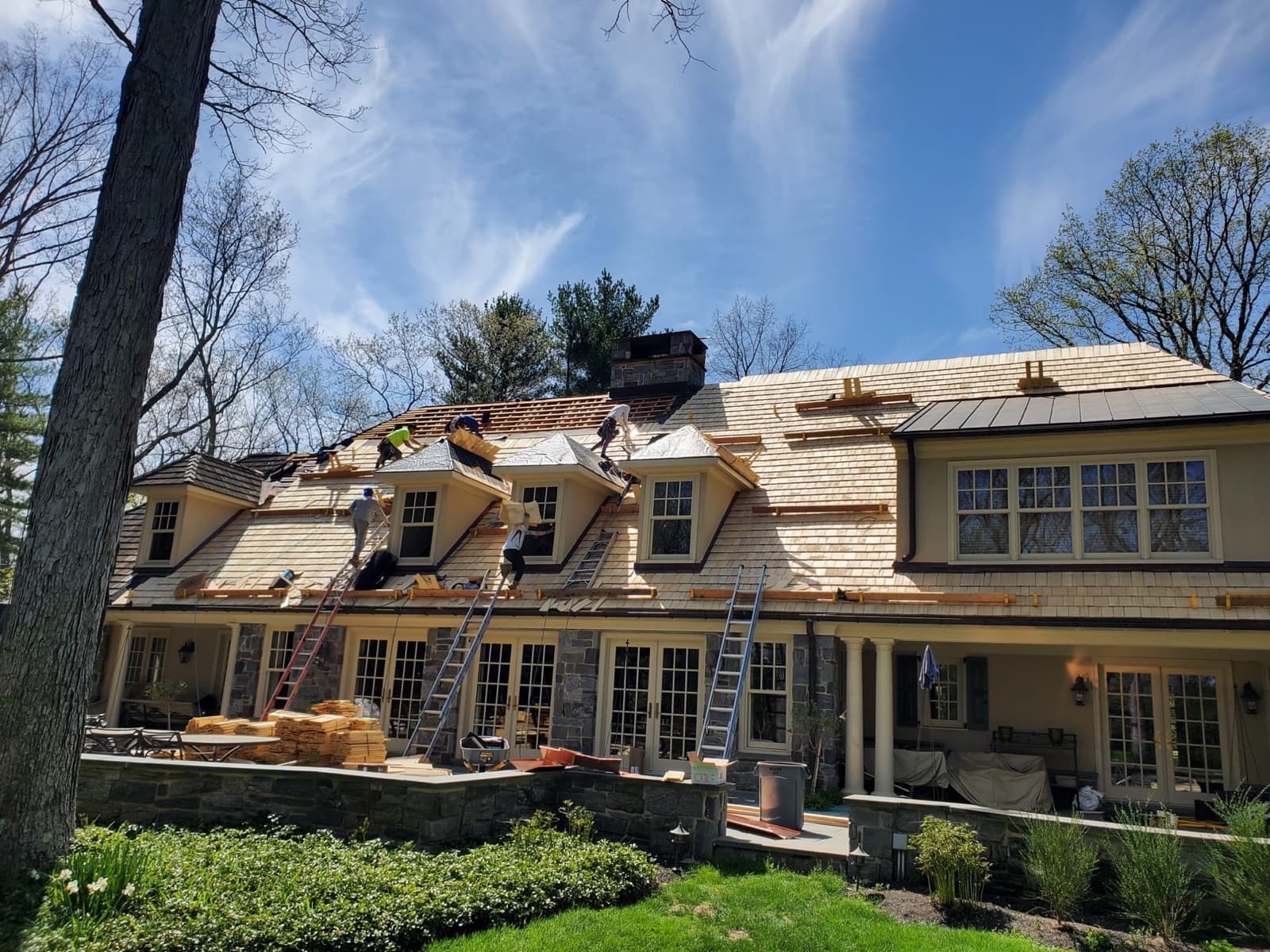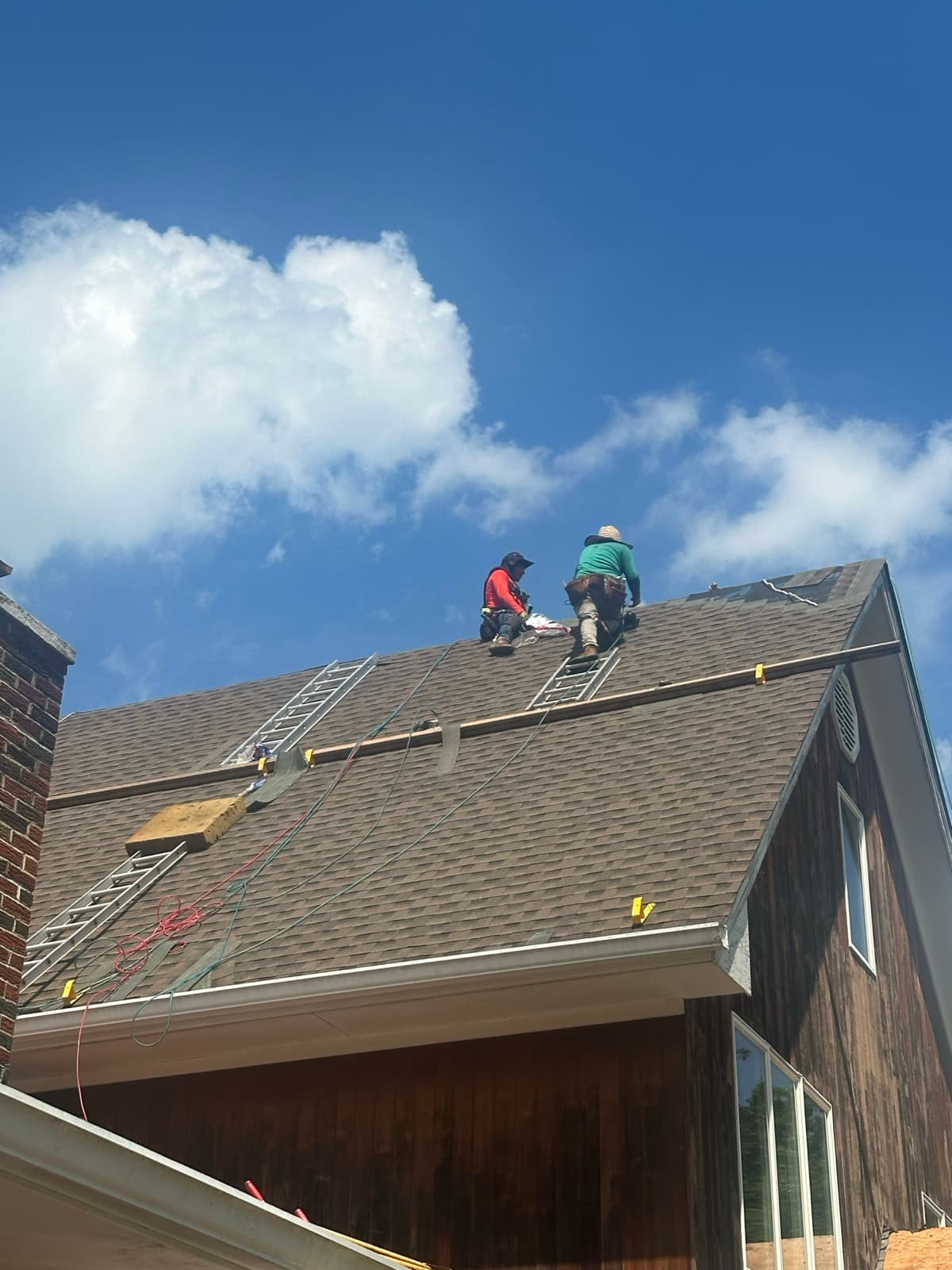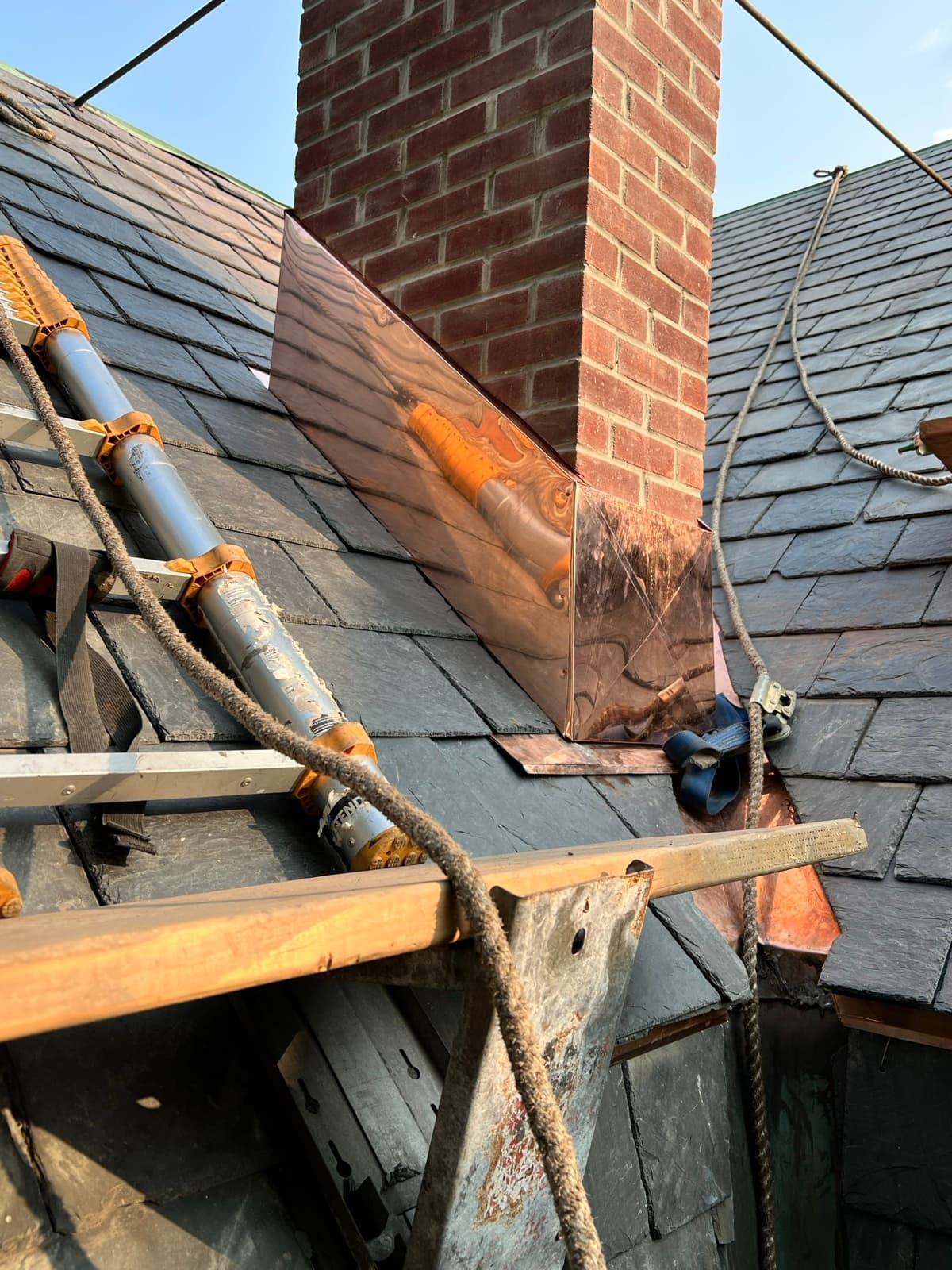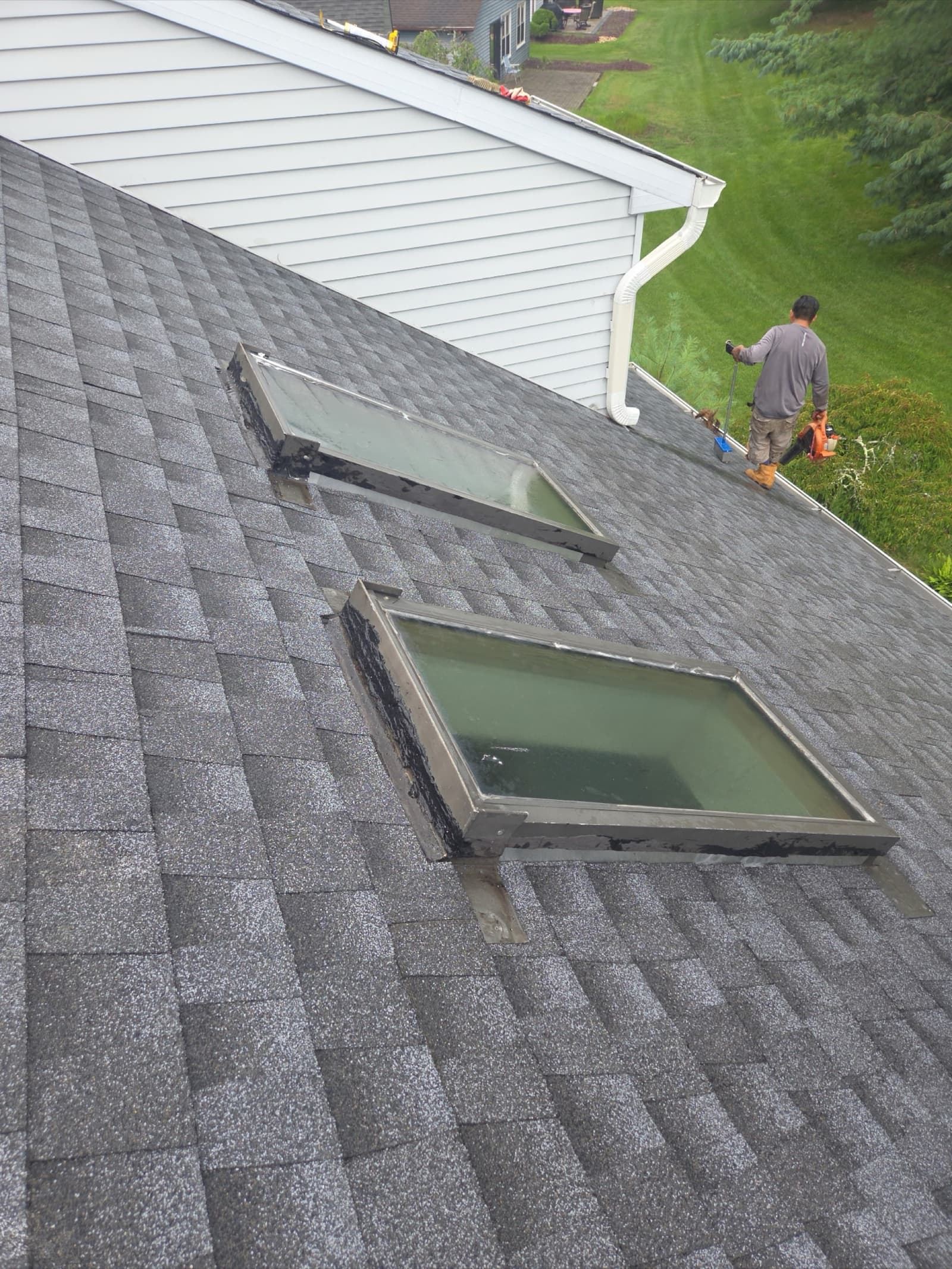
Bergenfield is a dense, built-out Bergen County borough of about 29,000 people in under three square miles, and most of it went up in the two decades after the Second World War. For a homeowner here the roofing question usually has two halves. The first is what the roof actually needs, which on a 1950s Cape or ranch on its second or third covering is a question the tear-off answers. The second is what the borough expects of whoever does the work — and Bergenfield is unusual in having a clear, roofing-specific answer to that in its own code. We inspect the roof, photograph what we find, and put the scope and the price in writing before anything is scheduled.
Housing in Bergenfield
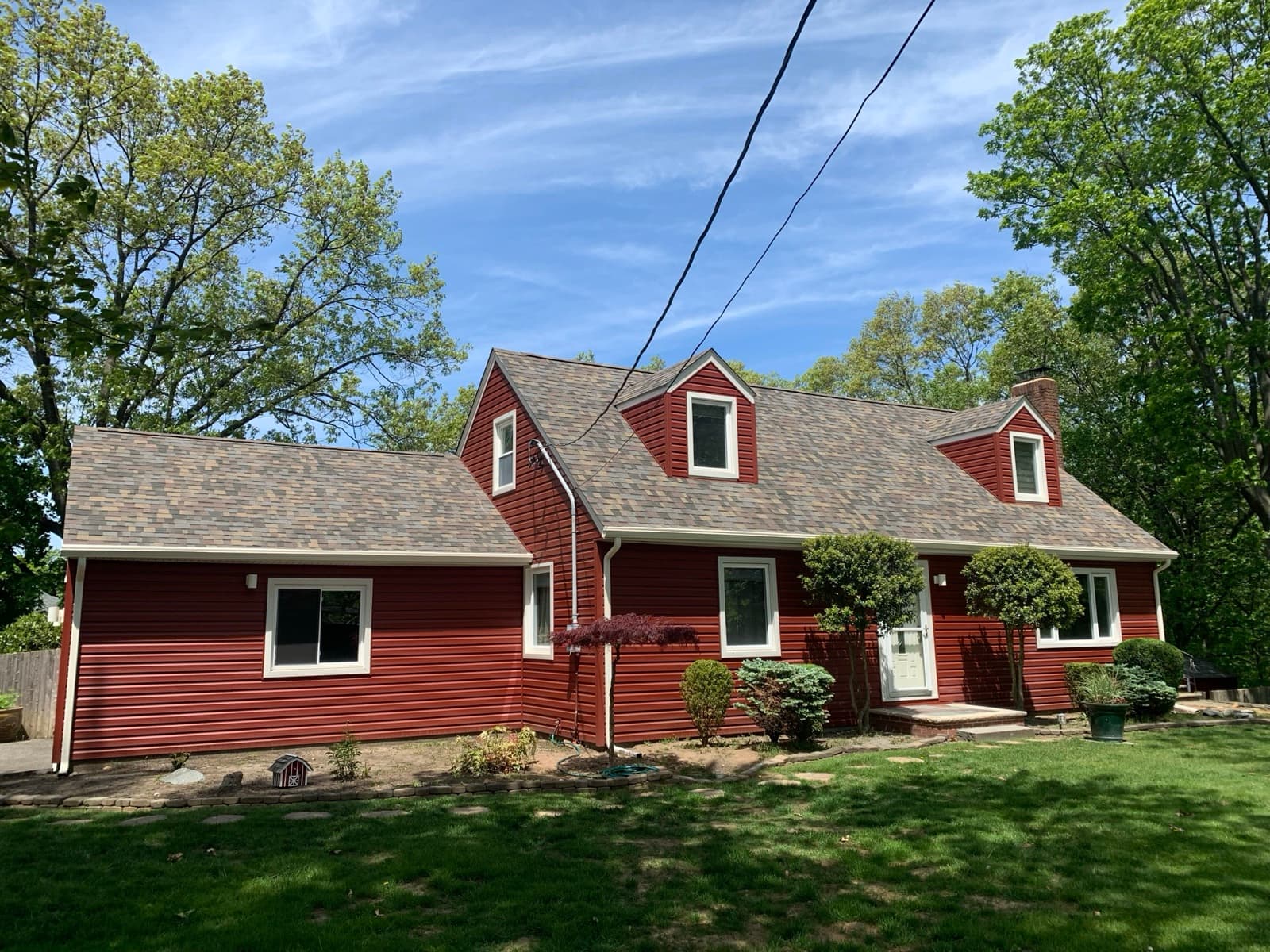
The borough's housing is dominated by the 1940s and 1950s: modest single-family Capes and ranches on small lots, with a substantial minority of two-family and small multi-unit buildings. Roughly seven in ten occupied homes are owner-occupied and about the same share are detached. That detached-versus-attached split matters more here than in most towns, because the state rule that exempts a reroof from needing a construction permit is written for detached one- and two-family dwellings only. A meaningful number of Bergenfield properties sit on the other side of that line, and the permit answer for them is genuinely different from their neighbour's. A 1950s roof is also rarely still on its first covering, so what is under the shingles — one layer or two, plywood or board sheathing — is the variable that most often changes a Bergenfield estimate once work starts.
What we most commonly find on Bergenfield roofs
- Second and third coverings over a 1940s–50s original, adding weight and hiding the condition of the deck underneath
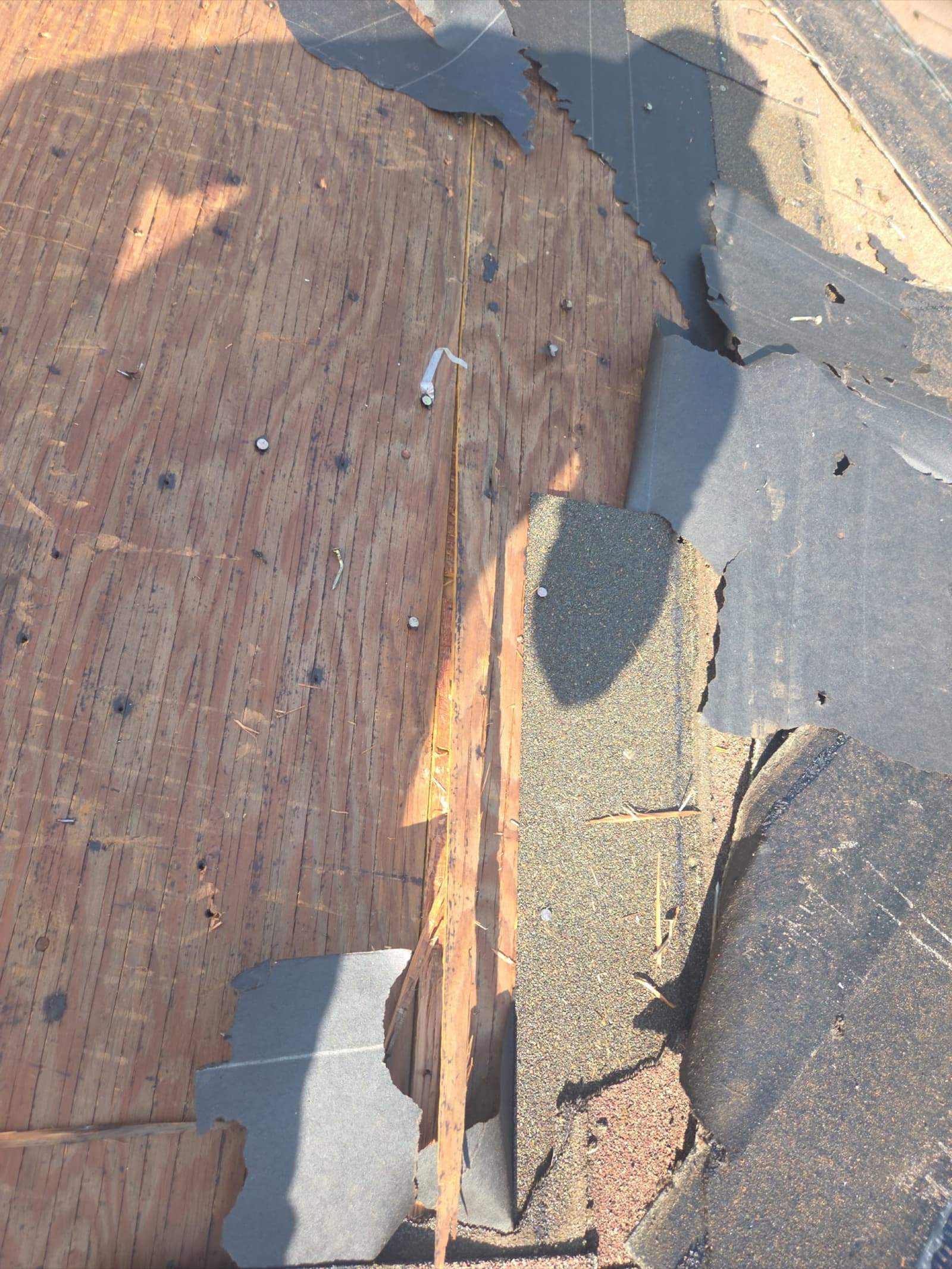
- Board sheathing with gaps between the boards, common in the borough's pre-war and early post-war stock, discovered at tear-off
- Worn three-tab shingles at the end of their service life on roofs that have never been fully stripped
- Failed pipe-boot collars and chimney counterflashing on houses built to the same detail on the same street, so they fail in clusters
- Low-slope rear and porch sections on two-family houses that were shingled when they needed membrane
- Ice damming at shallow eaves on small Capes with limited attic ventilation
In Bergenfield the borough checks the roofer, not the roof
Most New Jersey towns have nothing to say about who reroofs your house. Bergenfield does. Chapter 118 of the Borough Code, adopted in 2003, makes it unlawful to act as a builder or contractor in the borough without first registering with the Building Department, and § 118-3 requires that registration before commencing any work. Read that trigger carefully: it is commencing work, not obtaining a permit. A residential reroof that needs no construction permit at all still falls inside Chapter 118.
The chapter goes further than a generic contractor clause. Section 118-7 sets out eight classes of registration, and subsection C is a class named for this trade: a roofing and siding contractor, defined as a contractor engaged in applying roofing and siding materials to an existing or new structure. Bergenfield has, in other words, written roofing into its registration scheme by name.
The registration is not decorative. The application goes to the Construction Official in writing, on the form the Construction Official prescribes, and it is signed under oath. It has to disclose public liability insurance and workers' compensation coverage, the applicant's experience and time in the trade, whether a registration has ever been revoked or suspended elsewhere, and whether the applicant has ever been indicted for building, zoning or Uniform Construction Code violations. The Construction Official can revoke or suspend a registration for fraud in obtaining it or for violating the building, zoning or state construction codes, with a hearing on notice and an appeal that runs to the Superior Court.
One detail worth stating plainly, because it is the part homeowners get wrong: Chapter 118 does not reach you. Section 118-4 exempts any individual making repairs on their own private home. The obligation is on the contractor you hire. What that gives you is a question worth asking early — whether the roofer quoting your job is registered in Bergenfield — and it is a fair question to put to anyone, including us.
Detached, attached, and why the permit answer changes
The statewide rule is that replacing an existing roof covering is ordinary maintenance and needs no construction permit. The exact wording of N.J.A.C. 5:23-2.7(c)1x matters, though, because it is written for detached one- and two-family dwellings. Attached houses, townhouses and condominiums are not inside that exemption, and Bergenfield has a real stock of them.
Bergenfield's own published list of work requiring a building permit is consistent with the state rule. Residential roofing does not appear on it; commercial roofs do, and so does residential siding where polypropylene material is used. What the borough does not do anywhere on that page is affirmatively state that a residential reroof is exempt — the list is simply silent on it. So the accurate statement is that the borough's permit list does not include residential roofing, and that the no-permit answer for a detached house rests on the state code rather than on anything Bergenfield publishes.
Two other things push a Bergenfield job back into permit territory regardless of the house type. Replacing sheathing or decking is not ordinary maintenance, and neither is anything structural — a rafter, a ridge beam, a bearing element. On a roof that has been wet for a while, decking is a live possibility rather than a theoretical one, which is why we tell you in writing which category your job falls into before we start, and why we file when filing is required.
And there is one more, which is the reason we will not give you a flat borough-wide answer. If your home sits in Bergenfield's regulated flood hazard area, the borough's flood damage prevention chapter brings roofing into a separate review track. Chapter 161 expressly names roofing among the ordinary-maintenance and minor-work items that are to be evaluated by the Borough's Floodplain Administrator, so that the work can be checked against the substantial-improvement and substantial-damage rules that govern flood-area properties. That is not a construction permit and it is not a conflict with the state code — it is a parallel floodplain requirement that exists alongside it. It applies by location, so the honest version of the Bergenfield permit answer is: for a detached one- or two-family home outside the flood hazard area, no construction permit; inside it, expect a floodplain review as well. We establish which applies to your address before work starts.
What Bergenfield does not regulate
It is worth saying what is not in the way here, because the reassuring answer is as useful as the cautionary one and almost nobody publishes it.
Bergenfield has no historic preservation commission, no architectural review board and no design review board. The borough lists twenty boards and committees — planning, zoning, site plan, shade tree, environmental, health and the rest — and none of them reviews the appearance of a residential roof. There is no local historic district approval step, and no municipal body that has to bless a change of roof colour, profile or material before you proceed.
That means the design decision on a Bergenfield reroof is yours, constrained by your own taste and by whatever your deed or homeowners' association says, not by the borough. If you want to move from three-tab to architectural shingles, change colour, or go to a designer or slate-look product, nothing in the municipal process stands in the way.
Why we work in Bergenfield
Bergenfield sits in a part of Bergen County we already cover — Teaneck and Tenafly are both a couple of miles away and both have pages of their own. What makes it worth its own page is that the borough asks a specific question of roofing contractors that most towns do not ask, and almost nobody explains it to the homeowner paying the bill. A registration requirement with a class named for this trade, teeth behind it, and an exemption that covers you but not your contractor is genuinely useful information when you are choosing who to hire. We would rather be the page that tells you what to ask than the page that tells you we are the obvious answer.
Bergenfield sections we cover
Bergenfield estimates cover the whole municipality — Foster Village, and downtown Bergenfield — across ZIP code (07621).