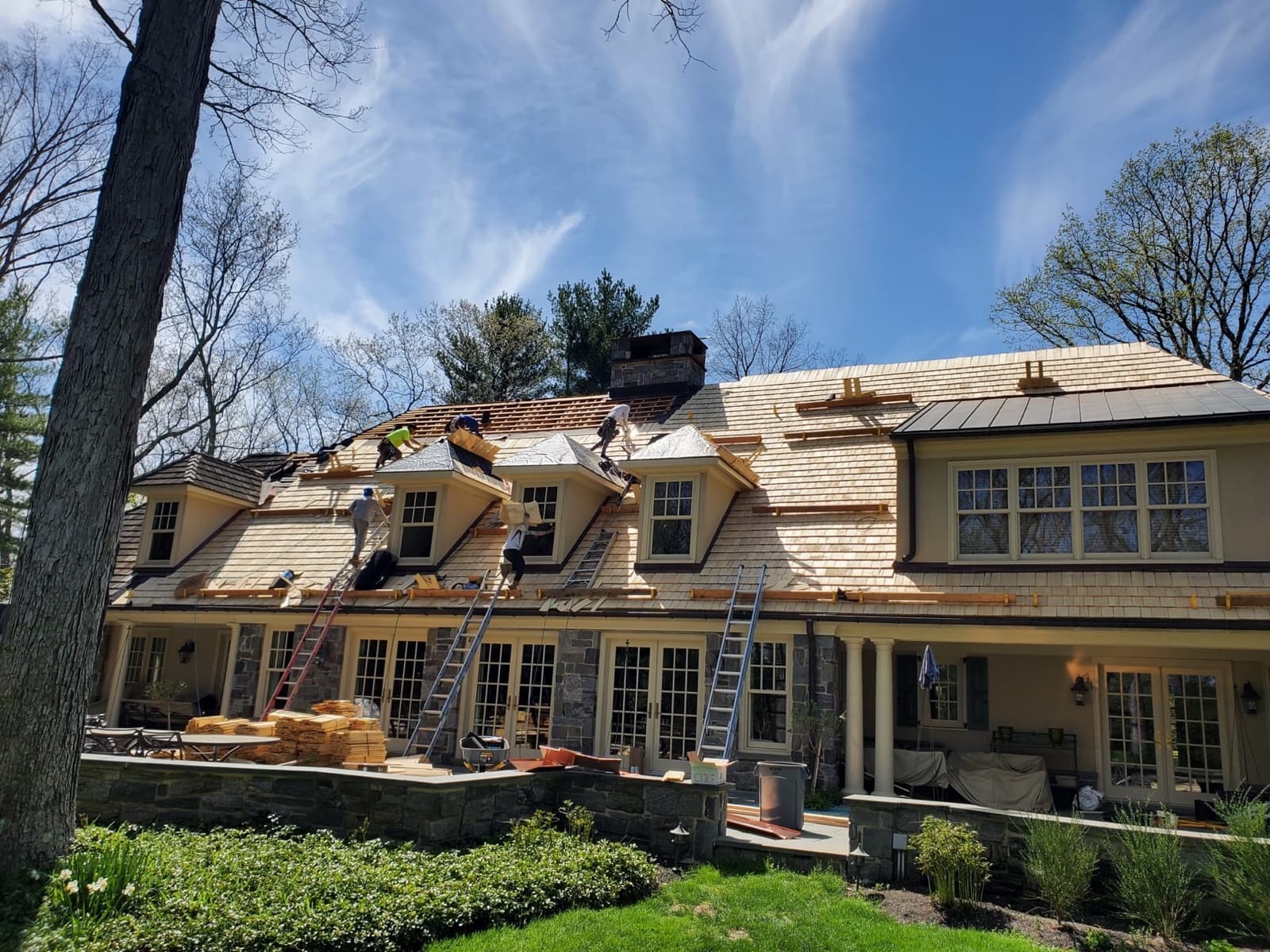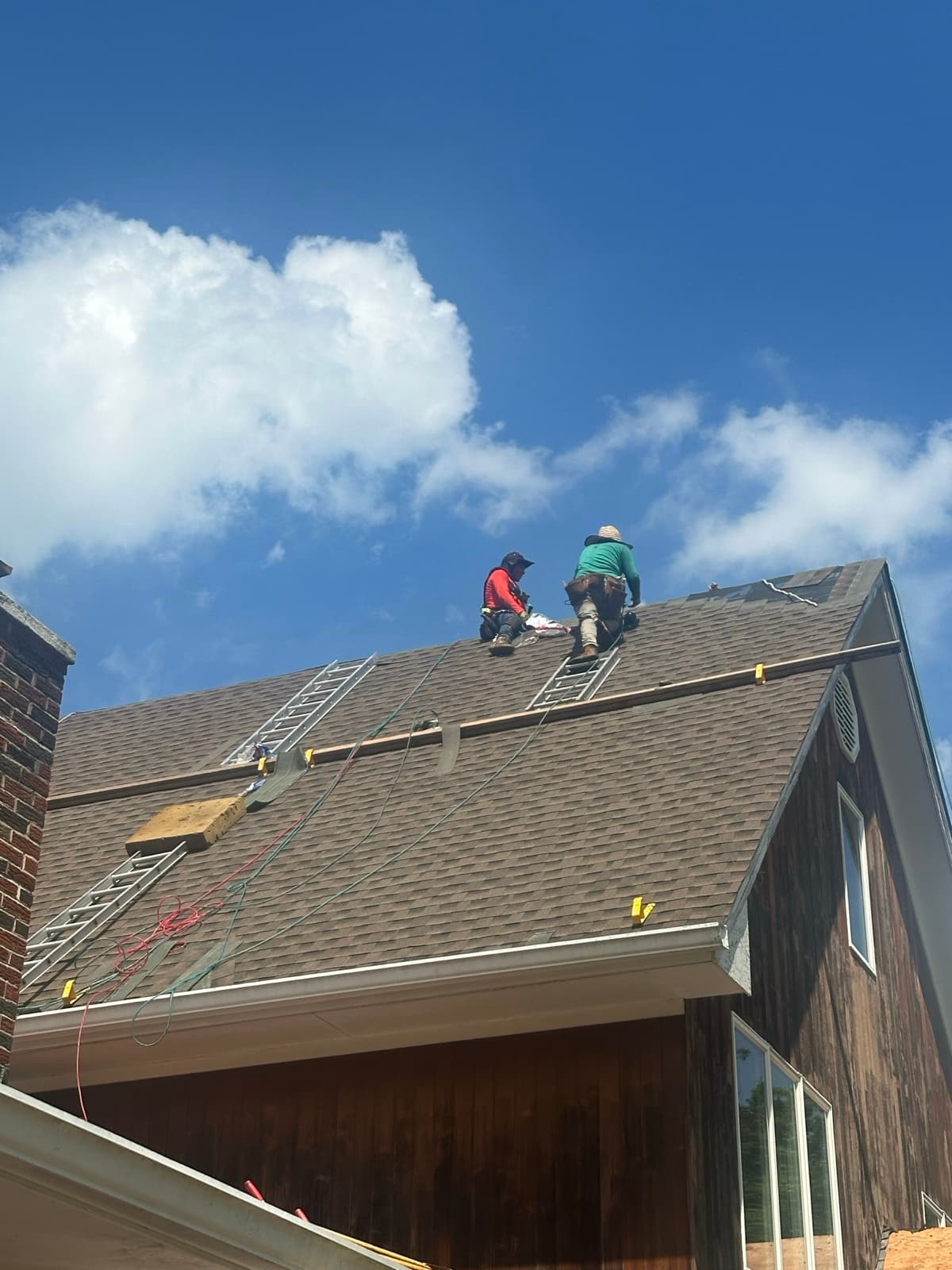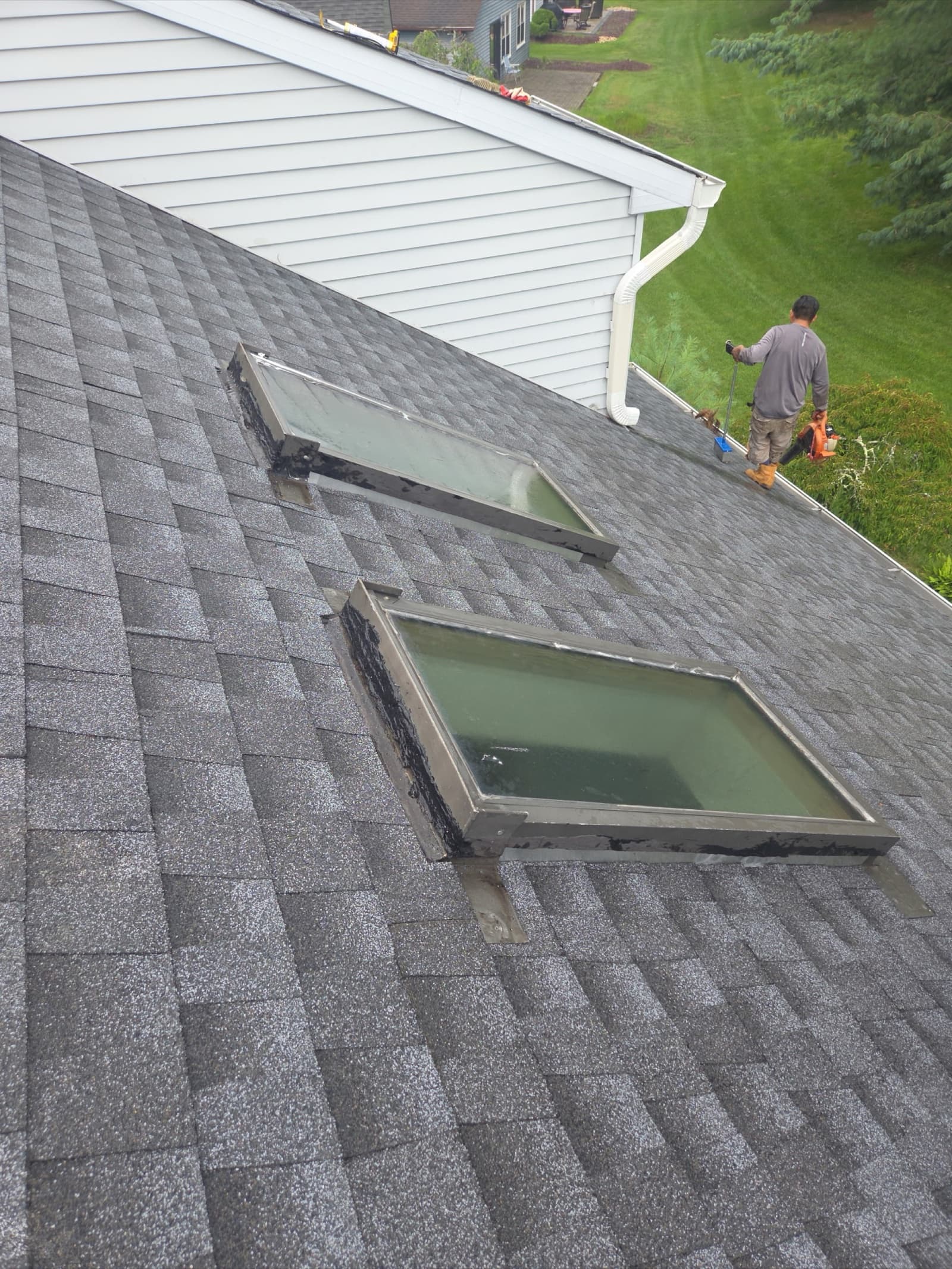
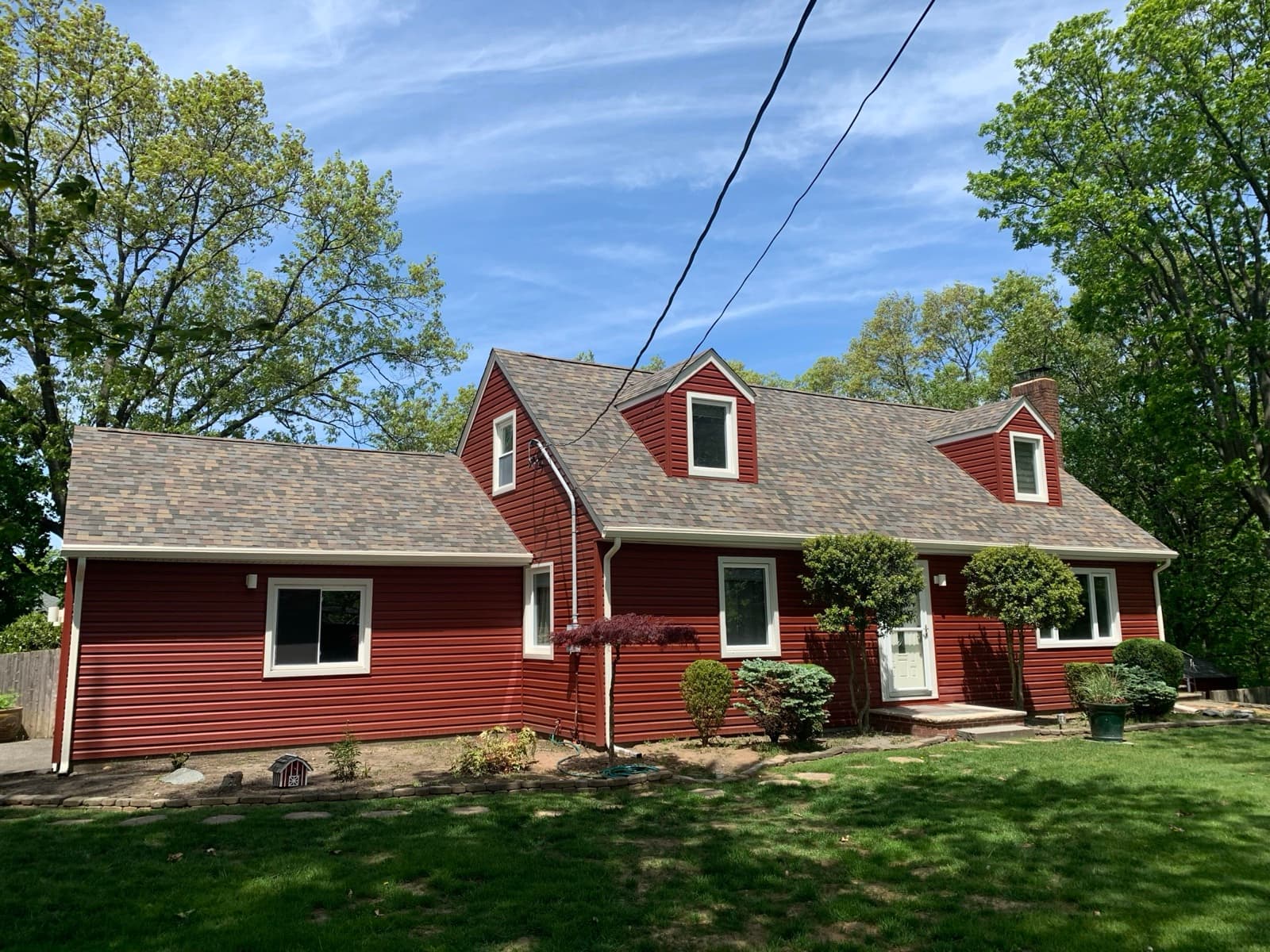
Two things make a Rutherford roof its own problem. The first is age: about 43 percent of the borough's housing was built before 1940, and that pre-war core was framed on site rather than trussed, so it produces cross-gables, intersecting ridges, dormers, turrets and long valleys. The second is density. Roughly a fifth of Rutherford's housing sits in two-to-four-unit buildings on narrow lots, which means rear low-slope additions and second-floor porch roofs tying into a steep original roof, neighbouring roofs close enough to complicate staging, and very little street frontage for a dumpster.
Housing in Rutherford
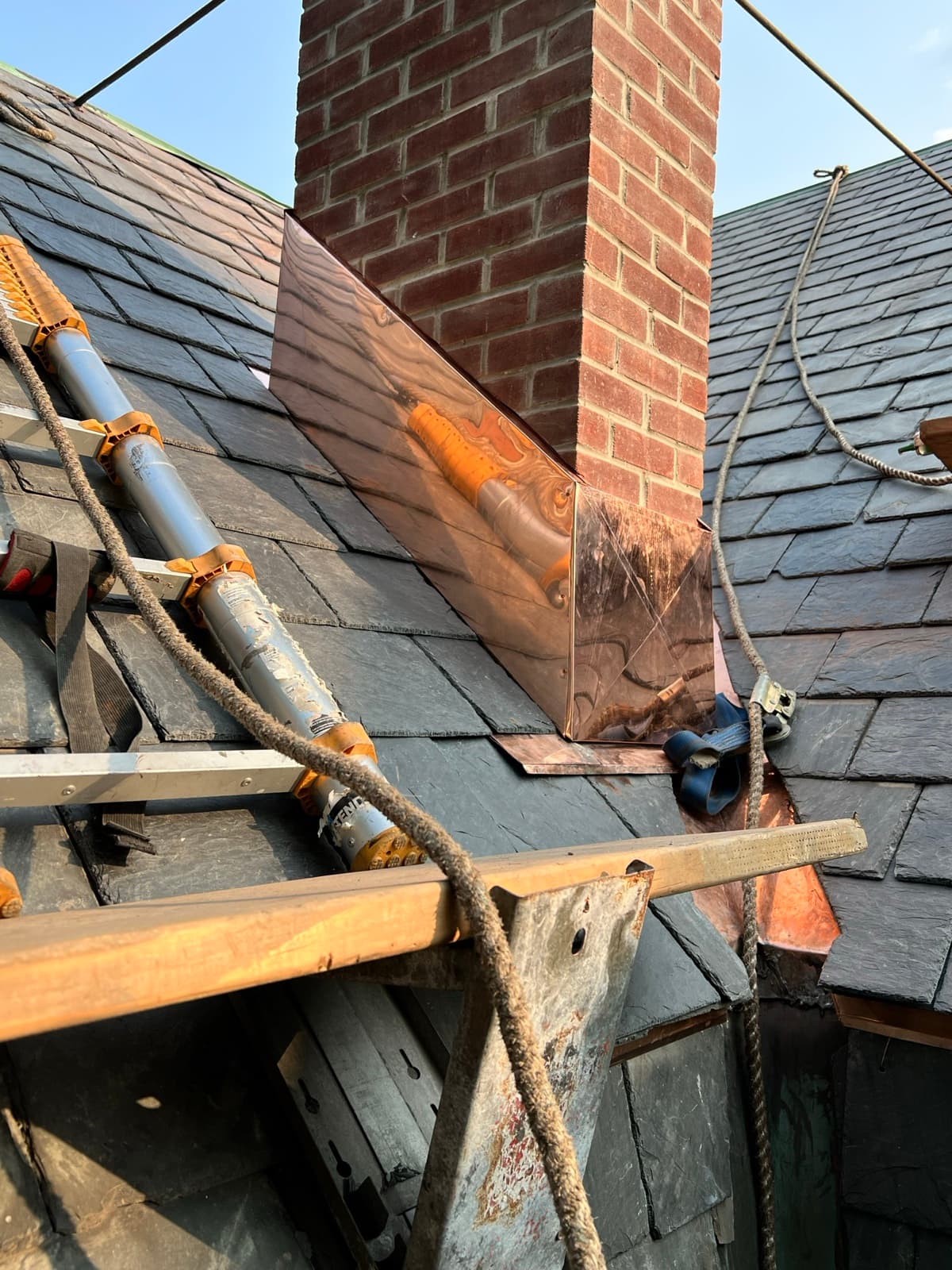
The borough holds two different roof populations inside 2.8 square miles. The pre-1940 stock along and around Ridge Road is late-Victorian and Tudor Revival in character: conical turret roofs, bay-window roofs, gable returns, and low-pitch wraparound-porch roofs that tie into a steep main roof. On those houses the flashing work controls the job, not the shingle work — the valleys behind bays and towers, and the tie-ins where a shallow porch roof meets a steep plane, are where water actually gets in. The 1940s and 1950s cohort is about a third of the housing and is much plainer: gable and hip capes and colonials with fewer planes and fewer dormers. Then there is the two-family stock, where a flat or low-slope rear addition sits behind a pitched front roof and needs a membrane system rather than shingle.
What we most commonly find on Rutherford roofs
- Valley failure behind bays and towers on the pre-1940 Ridge Road-era houses
- The tie-in where a low-pitch wraparound porch roof meets the steep main roof
- Flat and low-slope rear additions on two-families, shingled when they should have been membrane
- Turret and conical roof terminations, which need tapered work rather than standard courses
- Party-wall and roof-to-roof proximity on narrow lots, which limits staging and complicates edge detail
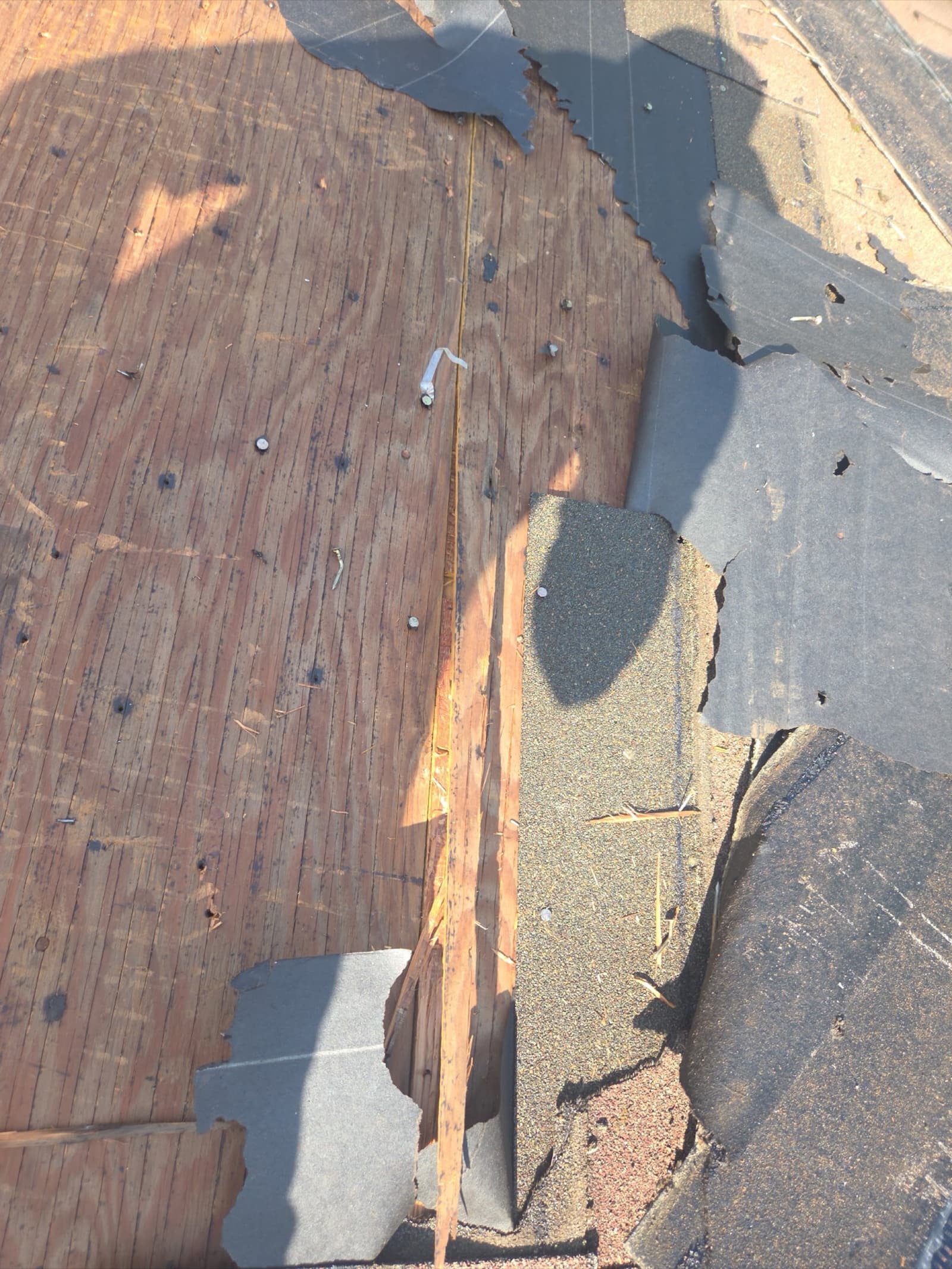
- Board decking that will not hold fasteners once a pre-war roof is stripped
Rutherford, not East Rutherford
Worth settling first, because it costs people time. Rutherford Borough (07070) and East Rutherford (07073) are two separate Bergen County municipalities with two separate construction departments. A homeowner who hires a company because its name matches their town can end up dealing with the other town's contractor, and a permit question answered for one borough is not an answer for the other. This page is about Rutherford Borough. Its enforcing agency is the Rutherford Building Department at Borough Hall on Park Avenue.
One more point on jurisdiction, because it is commonly got wrong: Bergen County does not issue municipal roofing permits. The county's construction board of appeals is exactly that, an appeals body.
The flood rule that can apply when no construction permit does
This is the genuinely unusual thing about roofing in Rutherford, and no other town we work in has it written this way. Replacing the roof covering on a detached one- or two-family house is ordinary maintenance under N.J.A.C. 5:23-2.7(c)1x, so it needs no construction permit. But Rutherford's borough code, in the flood-damage-prevention chapter adopted in December 2025, names roofing among the ordinary maintenance and minor work that is to be evaluated by the Floodplain Administrator through the floodplain development permit. The Borough Engineer holds that role.
The reason it matters is the substantial-improvement test. In a flood-hazard area, the cost of improvements is measured against a share of the building's market value, and once the threshold is crossed the building can be required to meet flood-resistant construction standards. A roof is not usually the thing that crosses it on its own, but it counts, and it counts cumulatively with other work.
So the practical answer for a Rutherford homeowner is that the permit question has two halves. The construction-code half is usually no permit. The floodplain half depends on whether your property is in a flood-hazard area along the Passaic River, Third River or Berry's Creek, and that is a question for the Borough Engineer rather than something a contractor should assert from a map. We will tell you plainly if your address looks like it needs that conversation, and we will not quote around it.
What the borough does not regulate
Rutherford's Historic Preservation Committee maintains named districts, including the Ridge Road District, and documents a historic walking corridor along Park Avenue. Those are inventory and interpretation, not design review: there is no historic preservation chapter in the borough code and the Committee holds no approval power over your roof. If you own a late-Victorian on Ridge Road, your material choice is yours.
One exception worth knowing about: parts of the borough east of Route 17 fall inside the Hackensack Meadowlands District, where construction plan review is handled by the state Meadowlands agency rather than by the borough. That affects very little residential roofing, but it is a different front door if your property is in it.
Why we work in Rutherford
Rutherford is a detail town. In a borough this old and this tight, the roof that lasts is the one where the valleys, the porch tie-ins and the flat-to-pitched transition were built properly, and the roof that fails is almost never the one where the shingles wore out. It is also a borough where two separate rules decide whether paperwork is needed, and getting that answer right before the job starts is part of the work rather than an afterthought.
Rutherford sections we cover
Rutherford estimates cover the whole municipality — Ridge Road, Park Avenue, Union Avenue, West End, Highland Cross, Meadow Road, Kip Avenue, and The Triangle — across ZIP code (07070).