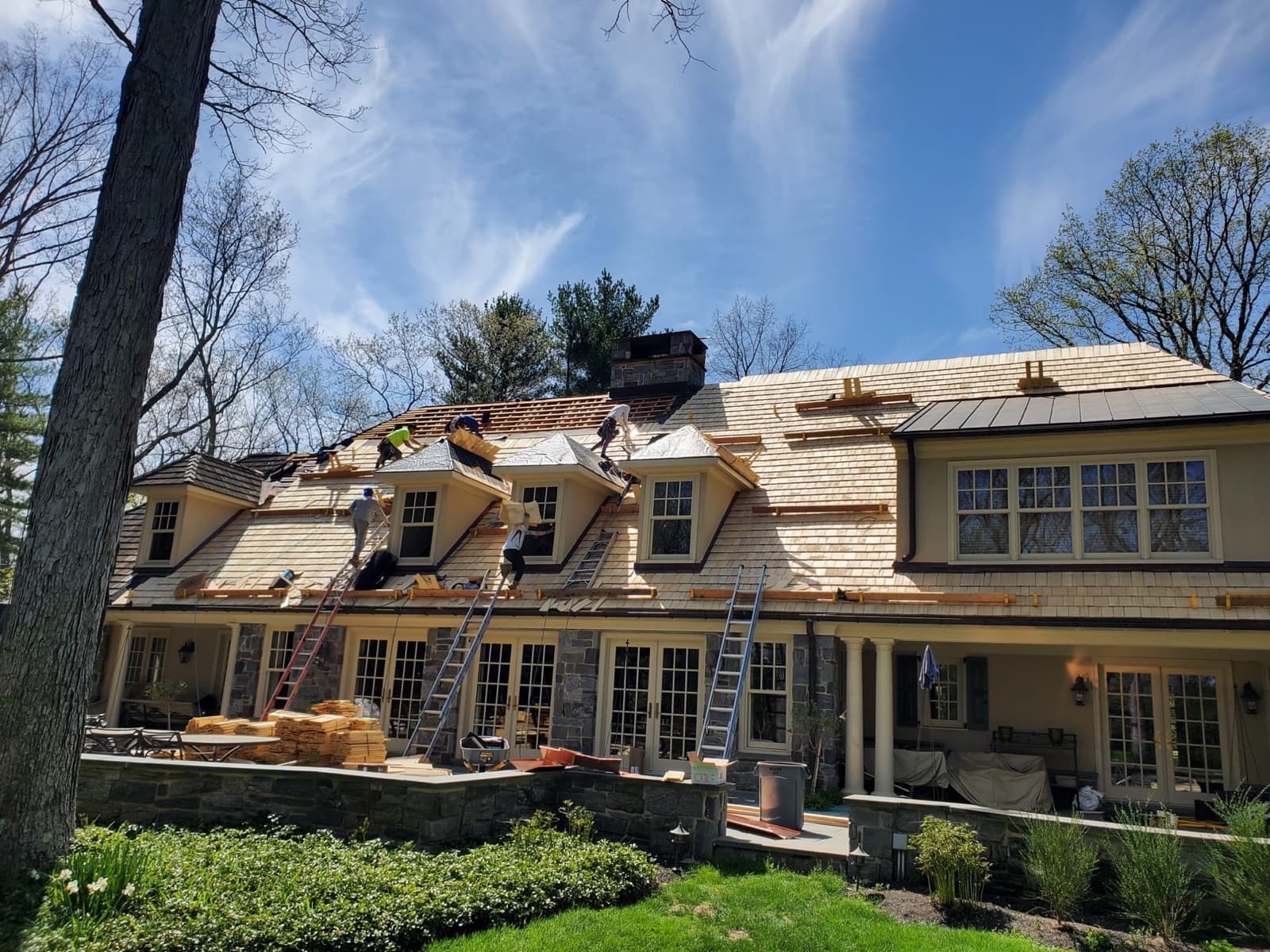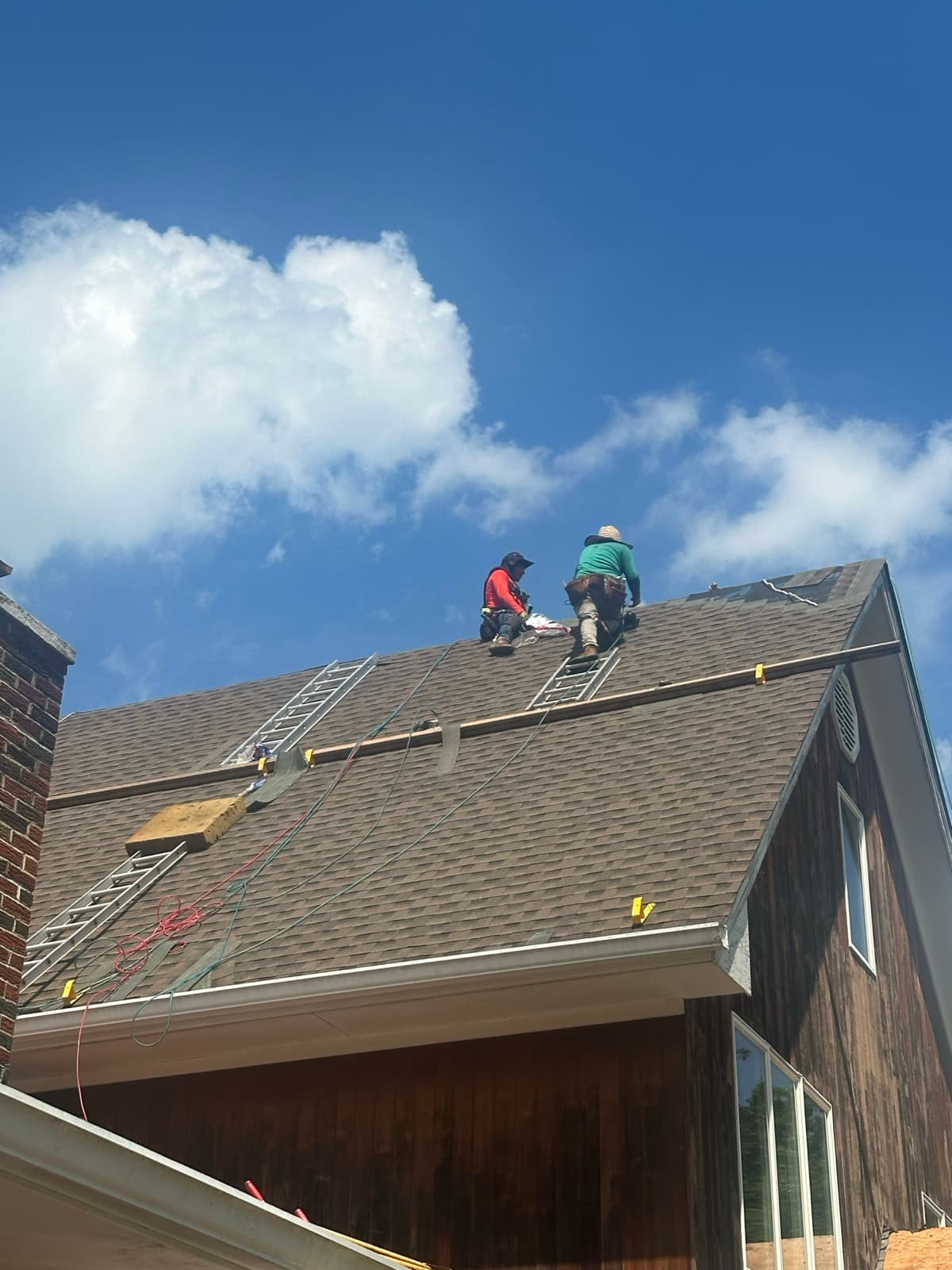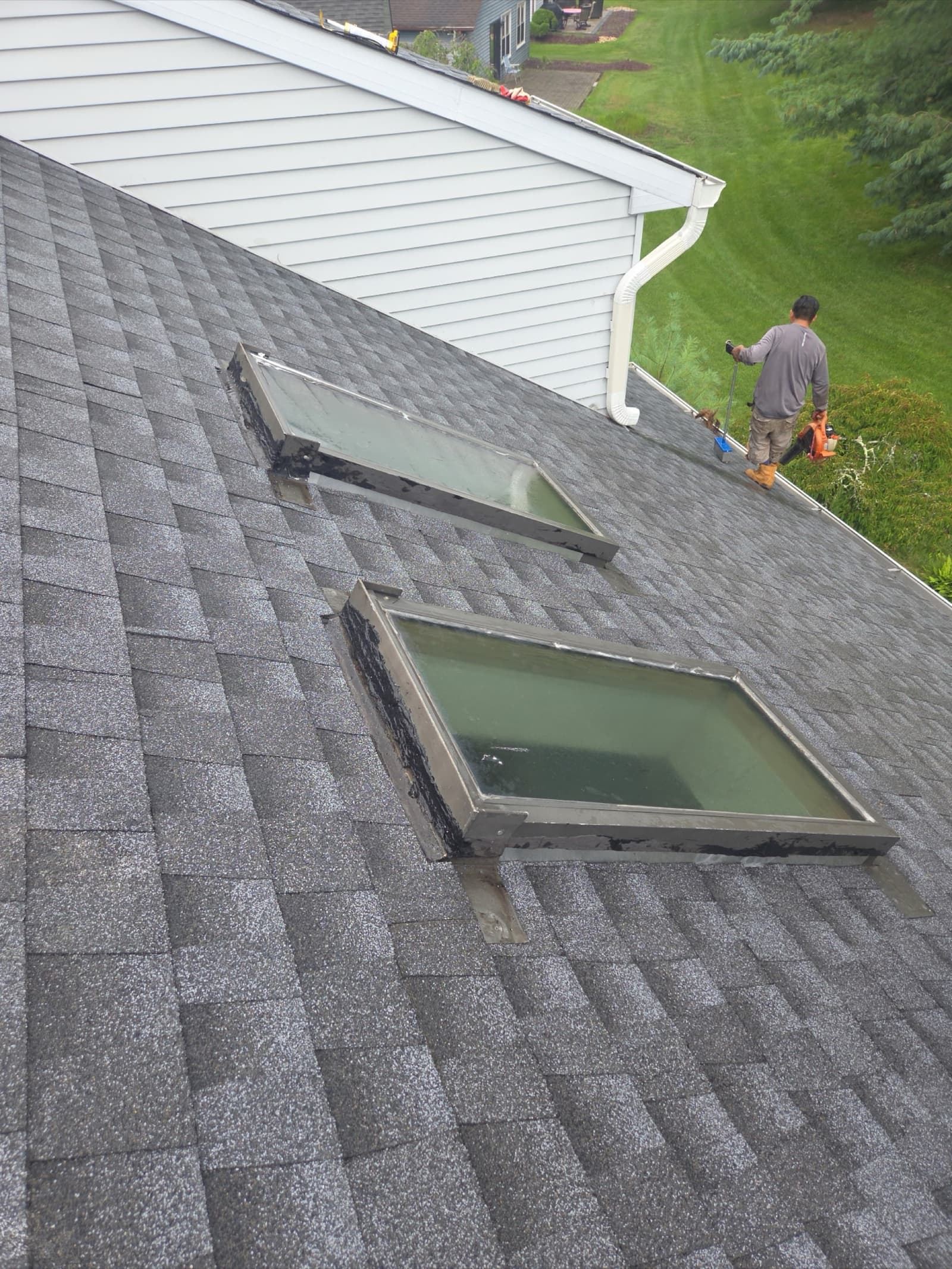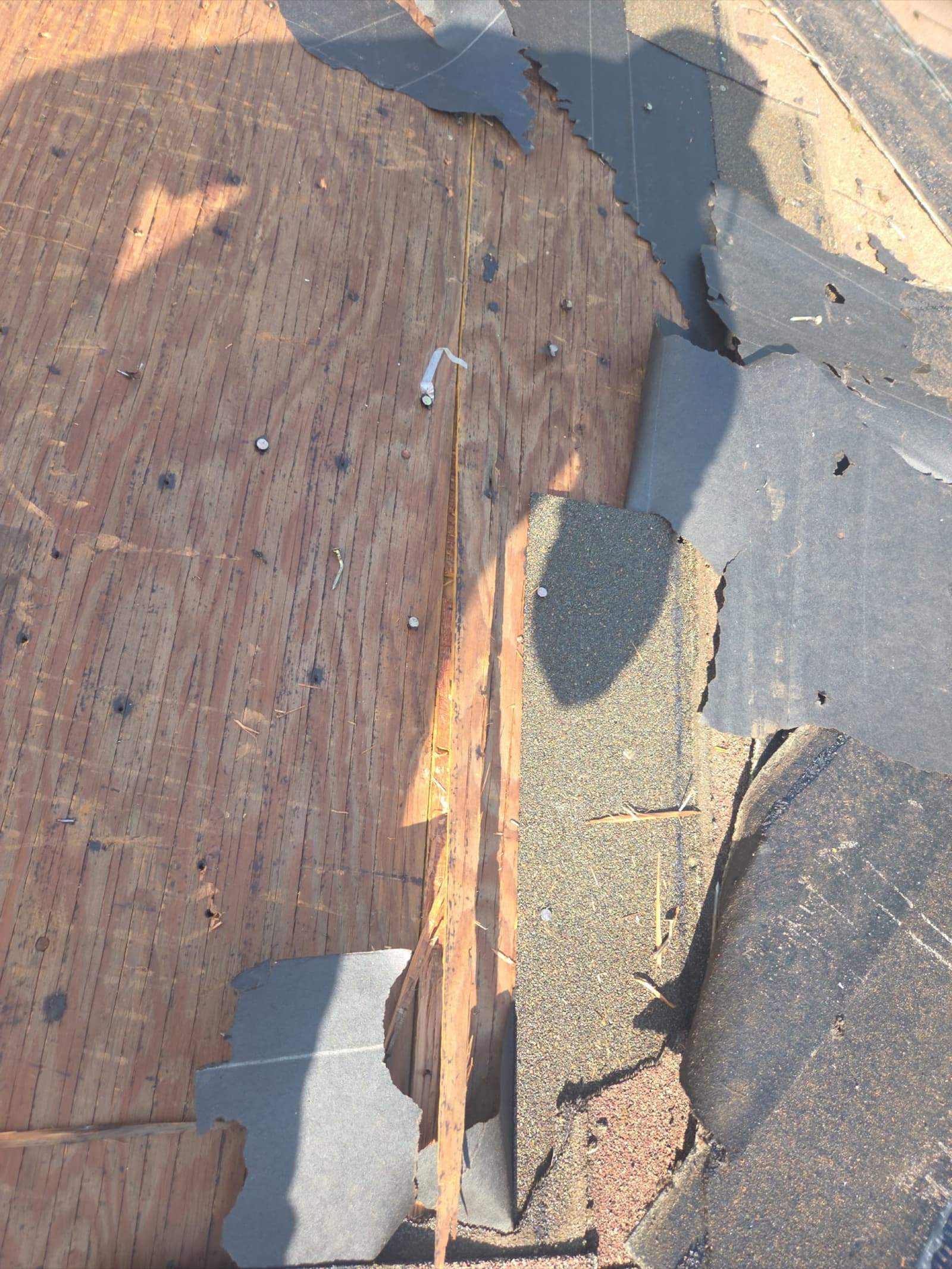
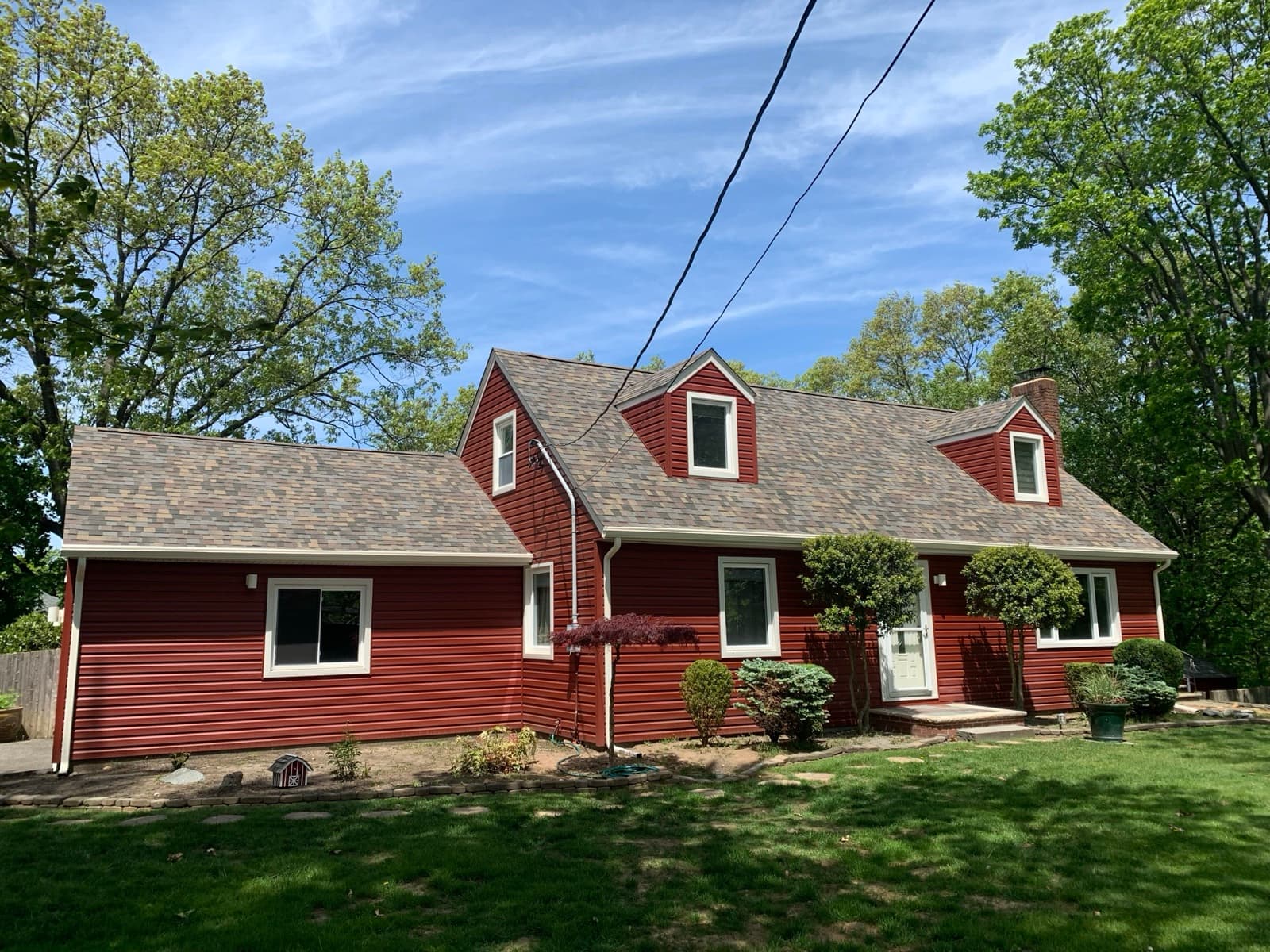
Millburn Township runs from the Millburn business district up through Short Hills, and it is one municipality, not two — Short Hills is a place name and a ZIP code inside Millburn Township, not a separate town with its own rules. That matters for roofing because the township has a design-review layer that runs alongside the state construction code, and it applies by location rather than by address type. For most of the township the answer is that your roof is your business. For homes inside one of the two designated historic districts, there is a step to take first. We tell you which of those two situations you are in before we quote, we inspect and photograph the roof, and the scope and price go in writing before anything is scheduled.
Housing in Millburn
Millburn's housing is old, large and architecturally serious. Roughly a third of its homes predate 1940 and the great majority predate 1980, and the stock runs from the township's original Victorian and Shingle-style houses through substantial inter-war colonials and Tudors to post-war and contemporary construction. The rooflines follow: steep pitches, multiple planes, towers and turrets on round, square and octagonal plans, eyebrow and shed dormers, deep valleys and a great deal of chimney and wall flashing. The township's own 2023 Historic Preservation Element of the Master Plan singles out expensive slate roof repairs as a recurring issue for owners of its older houses, which is a fair summary of the practical problem: these are roofs where the detail work, not the field area, decides both the price and the outcome.
What we most commonly find on Millburn roofs
- Slate fields with individual broken, slipped or delaminating slates, where the repair-versus-replace decision is worth getting right before anyone quotes a tear-off
- Tower and turret roofs with short, awkward valleys and heavy flashing that a standard shingle crew is not set up to detail
- Eyebrow and shed dormers where the curve or the sidewall junction has been sealed rather than flashed
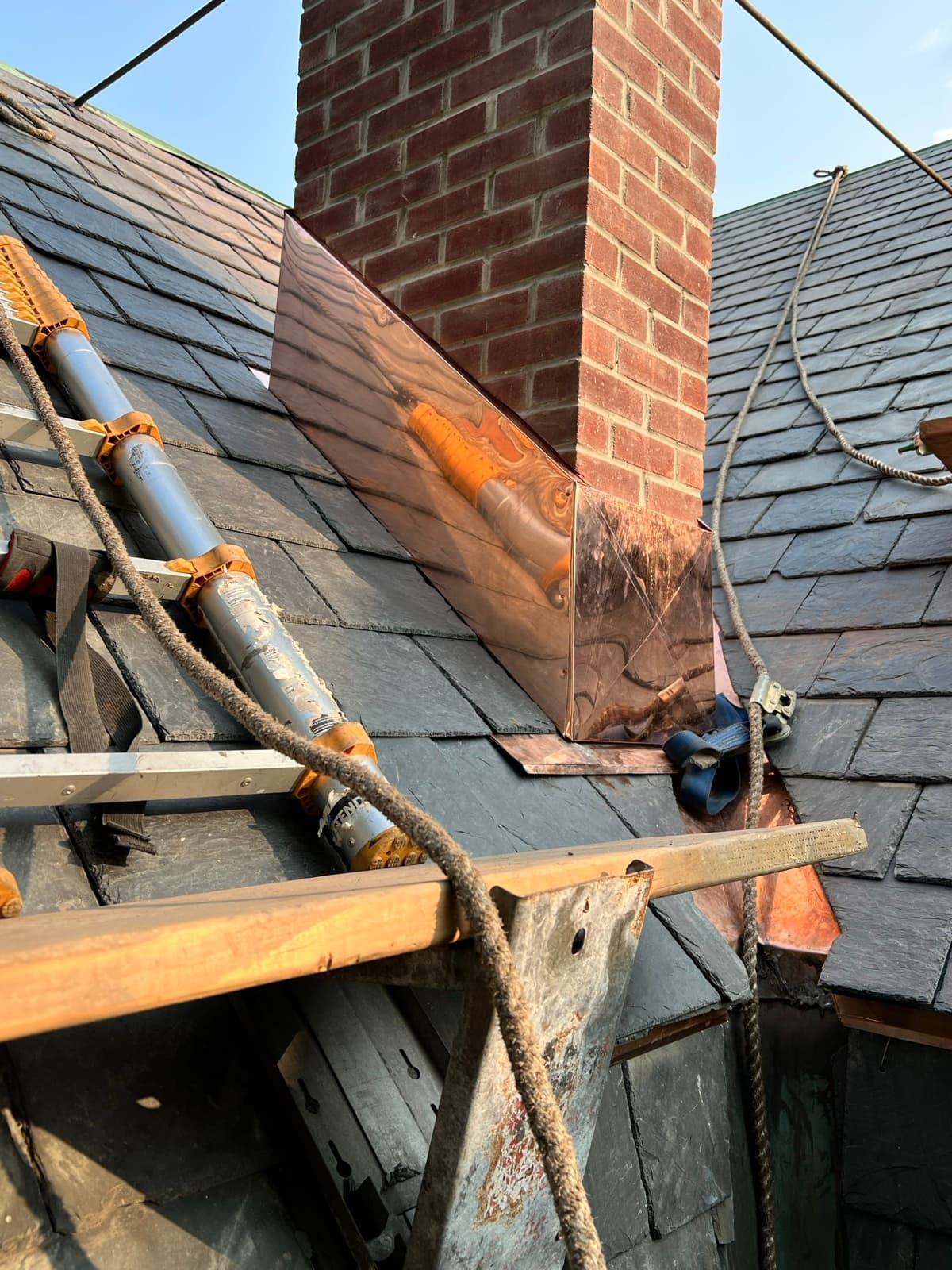
- Chimney counterflashing on tall masonry stacks, a frequent first point of failure on the township's older houses
- Deep valleys on multi-plane roofs that carry a concentrated volume of water and were often lined with material now past its life
- Copper valleys, gutters and detailing that need matching rather than substituting when a section is replaced
Two historic districts where roofing is named in the ordinance
Millburn's Development Regulations and Zoning Ordinance designates two local historic districts: the Short Hills Park Historic District and the Wyoming Historic District. Local designation is the thing that carries legal force here. It is a different mechanism from a National Register listing, which is an honour and a planning tool but does not by itself restrict what an owner does to a private house.
Inside those districts, § DRZ-805.1 requires a Certificate of Appropriateness from the Historic Preservation Commission before work commences — and the ordinance says expressly that this applies whether or not a construction permit is required for the work. That is the part homeowners miss. The state construction code may well exempt your reroof from needing a permit, and the design-review requirement can still apply, because the two run in parallel rather than one depending on the other. Subsection (a) of that section lists the triggering activities and names roofing among them. The provision was amended as recently as February 2024, so this is current law, not a legacy clause.
Now the limits, which matter just as much. This applies only to properties inside those two districts, and they are a minority of the township's parcels — it is not a Millburn-wide or a Short Hills-wide requirement, and anyone who tells you otherwise is overstating it. The ordinance also currently designates no individual historic landmarks outside the districts. And even within a district, a full Certificate is not automatic: § DRZ-805.2 excludes work found to be ordinary maintenance and repair, meaning a return to prior condition with in-kind material and workmanship, and also excludes changes not visible from a public right-of-way. Section DRZ-805.5 routes roofing that will not substantially affect a building's architectural characteristics to a Minor Work Review rather than a full hearing. In practice, a strictly like-for-like reroof inside a district is often cleared without a hearing, while a change of material, profile or appearance is the case that needs the full process.
We are not going to guess whether your street is inside a district, and we would be wary of any contractor who does. The district boundaries are defined by schedules of specific properties, not by a neighbourhood name — so the question is answered by address, not by area. The township's own guidance is to check your property status through its SDL Portal and, if you are inside a district, to expect that work may need Commission approval. That is the reliable way to settle it, and it takes a few minutes. If your home is in one, we plan the job around the review rather than around it.
Slate, and the repair-or-replace decision
The township's 2023 Historic Preservation Element names expensive slate roof repairs as a recurring concern for owners of Millburn's older houses, and that is the decision most likely to cost you real money here.
A slate roof is not a single product with a single lifespan. The slate itself can easily outlive the building, while the fasteners, the flashing and the underlayment that hold the system together do not. A great many slate roofs condemned as failed have a sound slate field and failed metalwork, which is a substantially smaller job. The honest diagnostic questions are how many slates are broken or slipped, whether the failures are scattered or concentrated at the valleys and penetrations, whether the slates themselves are delaminating or still ringing sound, and what condition the nails and the flashing are in. Those questions get answered on the roof, not from the driveway.
When slate genuinely has to go, the choice is between replacing in kind, moving to a slate-look designer shingle, or another system. Inside one of the two historic districts that choice is exactly the kind of change most likely to need a Certificate of Appropriateness, because it alters material and appearance rather than returning the roof to its prior condition. Outside the districts the choice is yours. Either way, we would rather document what is actually wrong and give you the range of options in writing than arrive with one answer already decided.
Millburn and Short Hills are one township, with one set of rules
Short Hills is a place name and a postal designation, not a municipality. It has no separate building department, no separate governing body and no separate code. The township covers ZIP codes 07041 and 07078, and between them they account for essentially the whole of Millburn Township's land area — 07078 being the larger share, which is why so much of the township carries a Short Hills address.
Practically, this means one set of answers. Permits for a Short Hills address are issued by the Millburn Township Building Department, on the same terms as for a Millburn address. The Historic Preservation Commission is a township body covering both districts. And the state construction code applies identically across the whole municipality: replacing the existing roof covering on a detached one- or two-family home is ordinary maintenance under N.J.A.C. 5:23-2.7(c)1x and needs no construction permit, while work that alters sheathing, rafters or a ridge beam does — and the exemption is written for detached dwellings, so attached homes, townhouses and condominiums are treated differently.
It is also why this is one page rather than two. Building a separate Short Hills page would mean publishing two competing pages for one municipality with one building department and one ordinance, which serves nobody looking for a straight answer.
Why we work in Millburn
Millburn is a township where the roofing decision genuinely benefits from someone having read the ordinance. There is a real design-review requirement that names roofing, it catches people out because it applies independently of whether a permit is needed, and it is also routinely overstated — plenty of Millburn homeowners assume they need approval when they do not. Getting that straight, and then giving an honest repair-or-replace answer on a slate or multi-plane roof rather than defaulting to a tear-off, is most of the value we can add here. We are open about the rest: this is a market we are new to, we make no claim to a local track record in the township, and the estimate is free either way.
Millburn sections we cover
Millburn estimates cover the whole municipality — Short Hills, Wyoming, Millburn Center, South Mountain, Old Short Hills, Glenwood, Knollwood, White Oak Ridge, and Deerfield-Crossroads — across all 2 ZIP codes (07041, 07078).